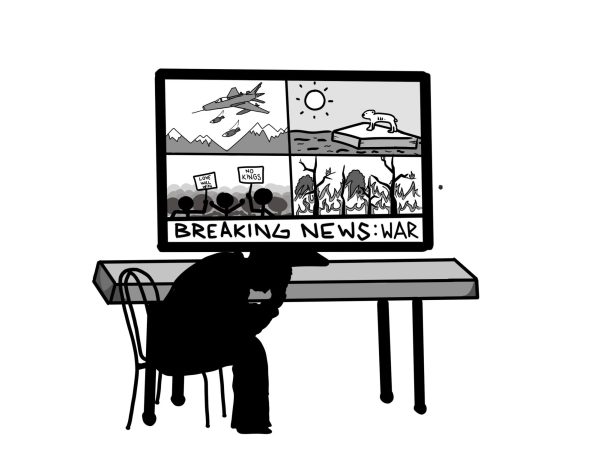
In a world so polarized, it’s no surprise that most people disagree with what they see in the news. According to a 2022 survey by the American Psychological Association, “73% of Americans reported being overwhelmed by the number of crises facing the world at that point.” In an effort to relieve yourself of the constant source of stress, you might be tempted to stop keeping up with the news at all. After all, why worry about things you can’t change? But while this logic might appear reasonable as a way to cut out negativity, it’s not a sustainable reaction to news-induced discomfort. This “head in the sand” tactic is counterproductive at best and unethical at worst. At the end of the day, being disillusioned and shaken by the news is not an excuse to stop keeping up with it.
Reading about famines, wars, immigration mega-prisons and the latest climate crisis can be overwhelming. It might feel like you’re being exposed to so much doom and gloom for no apparent reason, so it’s better to shut it off and eliminate any negative thoughts. But here’s the thing: reading about bad news isn’t supposed to feel good. That article about another school shooting, twelve dead? That’s not good news; it’s natural not to feel good. You will be uncomfortable. You will be sad. It’s okay to feel the emotional consequences of real life events, because they’re real, no matter how much we try to avoid them. No matter how distraught someone is about that tragic event, they are still much better off than the person who actually has to live through it. It’s okay to feel anxious, uncomfortable and frustrated about events that are anxiety-inducing, uncomfortable and frustrating. The headlines are negative because something negative is actually happening. We all need to allow ourselves to feel however the news makes us feel so we can focus on fighting the issue presented instead of turning to easy yet counterproductive solutions.
According to Jesse Holcomb, a professor of journalism and communication at Calvin University, “People who read newspapers will be civically engaged and are more likely to vote.” This isn’t surprising; people who watch the news naturally feel positive or negative emotions about what they’re hearing and use those emotions to make the change they want to see. It isn’t realistic to expect yourself to sit with negative emotions and be at ease—that’s why it’s so important to channel your emotions into action. After reading an article about a school shooting, for example, you have two options: either dismiss the event as just another unfortunate headline and vow to reduce your news intake—thus diminishing others’ suffering and doing nothing to address the root of the problem—or take action promoting gun laws through voting, protests and raising awareness, which can actually make a difference and leave you feeling empowered. Even doing something as simple as voting, when paired with a strong sense of current events, is enough.
It’s still important not to neglect your mental health and be mindful of your news intake. When consumed from the wrong sources and to an excess the news can have harmful effects on your mental health. 53 percent of US adults get at least some of their news through social media (Pew Research), and according to a study by Psychology Today, news consumption on social media is linked to worsened mental health (like depression and anxiety). Also, checking the news can be addicting. According to Dr. Adam S Anderson in an interview with Mayo Clinic, “News outlets, and particularly social media, are geared toward showing things wherein the more attention they catch, the more advertising it brings.” Similarly to doomscrolling, constantly refreshing and checking the news releases dopamine that keeps us going back for more. But the solution to these issues doesn’t lie in a total rejection of the news. Instead, focus on curating the quality of the news you consume by shifting from sensationalist news sources to reliable, high quality journalism. Then, instead of constantly checking and re-checking the news, dedicate just a few minutes every day to staying informed. Taking short breaks from the news to take care of yourself isn’t the same as completely forgoing it—sometimes, disconnecting is necessary to maintain your mental health.
Above all, don’t stop caring about what’s happening to others just because it’s not happening to you. The news is unpleasant but necessary. Behind every depressing headline that’s making you uncomfortable, there are human beings who are feeling a hundred times as much pain as you from the event you’re only reading about, and they need your awareness and action.