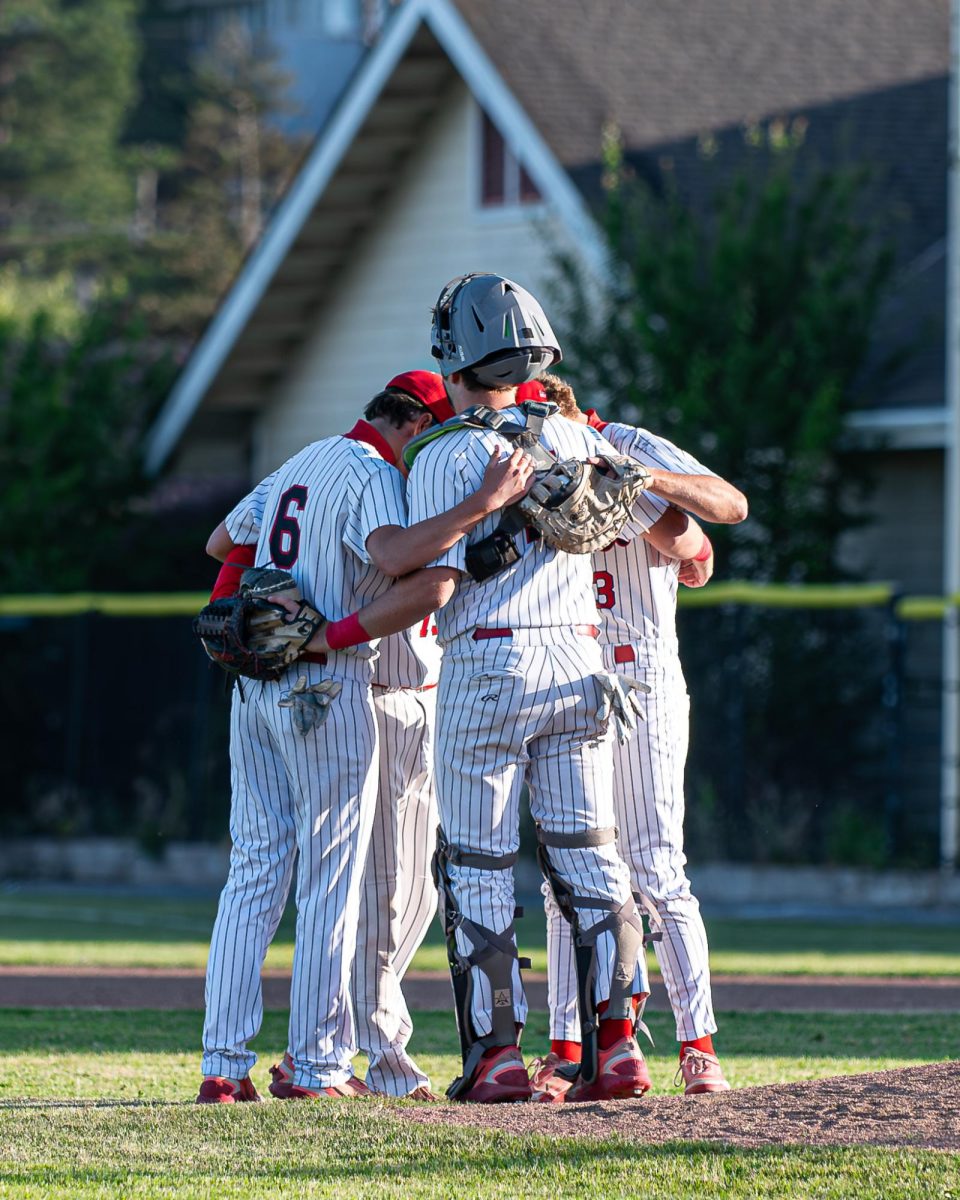
For a select few, high school sports are not the end of their athletic journey. In order to continue sports careers at a college level, high school athletes need to spend countless hours training so that they are prepared for showcases over the summer.
After a long spring season, the recruiting process is in full tilt, with students traveling from coast-to-coast to play in front of college coaches. Sophomore Riley Buck discussed the ways in which she and other girls’ lacrosse athletes work to get recruited over the summer.
“I’m doing a bunch of tournaments, showcases and camps this summer,” Buck said. “They’re mainly in New Jersey and Delaware.”
Junior and varsity baseball player Chase Johnson described the rigorous summer lifestyle that comes with college recruiting. Johnson currently plays for Alpha Prime 2027, ranked the 13th-best team in the nation according to Perfect Game. The team has nine Division I commits, and plays at the best tournaments in the United States.

“My travel team flies out to North Carolina, where we play two games a day in 95-degree heat,” Johnson said. “It’s not easy and definitely takes a toll on your physical health.”
For spring sport athletes like Johnson, a grueling four month season leads right into travel ball, with only a week or two to rest. As a result of this, many athletes enter the summer season already dealing with a few injuries and are pressured to play through them in order to maximize their opportunities.
“I’m playing through pain right now in my Redwood season as I’m dealing with a wrist injury,” Johnson said. “But once you get to these big games with big opportunities, a sprained wrist doesn’t really outweigh the benefits you could get from having a good couple at-bats.”
With the amount of time for recruiting being so short, athletes like Johnson can’t risk missing a game, as they know dozens of scouts and coaches are watching their competition.
“Summer ball is composed of all the best players on high school teams who are also some of the best players in the country,” Johnson said. “So it definitely draws a way bigger crowd with dozens of scouts and coaches.”
Likewise, the top lacrosse tournaments draw in a great number of scouts, as they are able to see hundreds of the best recruits in the class all in one location.
“At one game, there will be 200 coaches on the sideline sitting there with clipboards and their college merch on,” Buck said. “It’s terrifying.”
However, today’s baseball recruiting process has changed due to the growing transfer portal culture. Top DI teams mainly consist of older and more experienced transfers.
“College coaches don’t really care about developing you to be a big leaguer, they just want to win and be successful now,” Johnson said. “Why would they take a scrawny high school kid when they have a 20-year-old JUCO (junior college) guy who’s 225 pounds and has already played multiple college years?”

Similarly, Buck explained how girls’ lacrosse coaches focus more on bigger and stronger transfers instead of a skilled yet physically less developed high schooler. Consequently, the already busy high schoolers are forced to work even harder for a spot at a top program.
“I play lacrosse seven days a week for at least an hour a day,” Buck said. “Every month I send 25 emails to different schools, getting my name out there and adding in my highlight reel.”
While college programs continue prioritizing older, more physically developed transfers, high school athletes are left competing for fewer opportunities. For players like Buck and Johnson, that means balancing school with constant training, recruiting outreach and pressure to stand out, all for the chance to continue playing the sport they love at the next level.