Every morning, the 5.5 million Oura Ring users wake up and check their scores before even getting out of bed. Waking up to that number often decides how they feel about their day: whether they slept well, worked out enough or if something is wrong with their wellness. While Oura Rings are marketed as a tool to improve one’s health, they can ultimately be harmful because they often produce misleading data that negatively impacts users’ mental health, encouraging anxiety and unhealthy relationships with both sleep and fitness.
One of the major issues with Oura Rings is that the data it gives users is not always accurate. The Oura Ring tracks the stages of sleep, wake, light, deep and REM, and how long the user is in each of these stages. The ring then uses this data to calculate a sleep score. These scores range from 85-100: Optimal, 70-84: Good, 60-69: Fair and 0-59: Pay Attention. Although knowing how well you sleep may be nice, the data isn’t always accurate. According to a study posted in Scientific Reports, across all of the stages of sleep, the Oura Ring only has a 53.18 percent accuracy rate of tracking these stages. This could make someone who gets a bad score think that they need to improve their sleep, even if they feel well-rested. On the other hand, someone could see a high score and be extremely tired, and instead of figuring out why they are tired, they just listen to the Oura Rings’ sleep score, ignoring any real problems that might be causing them bad sleep. In both of these scenarios, the Oura Ring can distort how people understand their health.
Despite the issues with accuracy, smart rings are becoming increasingly popular. According to market research company Circana, smart ring sales increased by 195 percent in the first nine months of 2025, compared to 2024. This shows that more people are getting influenced to buy these products, even though the data that it gives is not 100 percent accurate. As the devices become more popular, their influence on how people perceive themselves is also shifting.
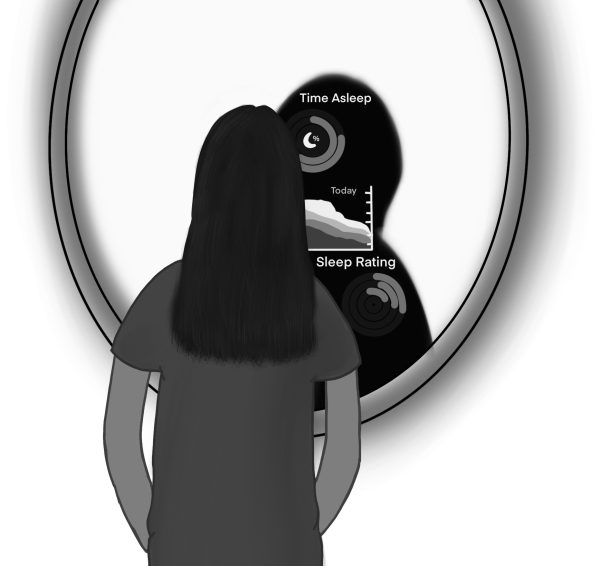
Beyond giving misleading data, Oura Rings can also increase anxiety among users, causing a decline in mental health. Some users report becoming obsessed with their scores, constantly checking scores and seeing how their health is. One Oura Ring user quoted by Cybernews stated, “It’s weird, it’s supposed to help you be aware of your habits and steps, but all the tracking intensified my anxiety.” This shows how technology that is designed to help people feel in control can make them feel more stressed. Instead of paying attention to the signs that their body gives them, users begin to trust scores over their own body, even when the scores aren’t totally accurate.
This isn’t only seen by users, but health experts have also expressed concerns about the constant monitoring that Oura Rings provide. According to anxiety specialist Joanna Hardis, fitness trackers like the Oura Ring can amplify anxiety. She states that, “The more we attend to something, the more we’re training our brain to worry about it.” This shows that constant monitoring trains the brain to worry, which over time could increase anxiety in other parts of someone’s life. A 2019 study from the University of Copenhagen showed that a majority of people rely on fitness trackers as if they were a medical device, and this causes unnecessary anxiety over changes in the body that are normal.
It is understandable to think that Oura Rings help people become more aware of their habits and make healthier decisions, that tracking sleep encourages people to take accountability for their own sleep and helps them understand what needs to be done to improve that aspect of their life. The ring is advertised as a tool that does all of those things, but it overlooks the inaccurate data. When people begin to hyperfixate on data that isn’t guaranteed to be accurate, the ring stops being a helpful tool, and begins to cause harm.
If wearing an Oura Ring is something that you truly want to do, be careful with how you use it. Licensed therapist Kate Miskevics says that, “We have to think about how wearables might take away from these technology breaks since they give us even easier access to our tech lives.” If you are going to wear the ring, consider setting limits on how much you check your data. Also, consider focusing more on listening to your body, not depending on the data that the ring provides you with. On the outside, Oura Rings look like a tool to improve your health, but in reality it can encourage anxiety and an unhealthy relationship with your body. People should focus on the physical and mental signs that their body gives them, not numbers from a ring.