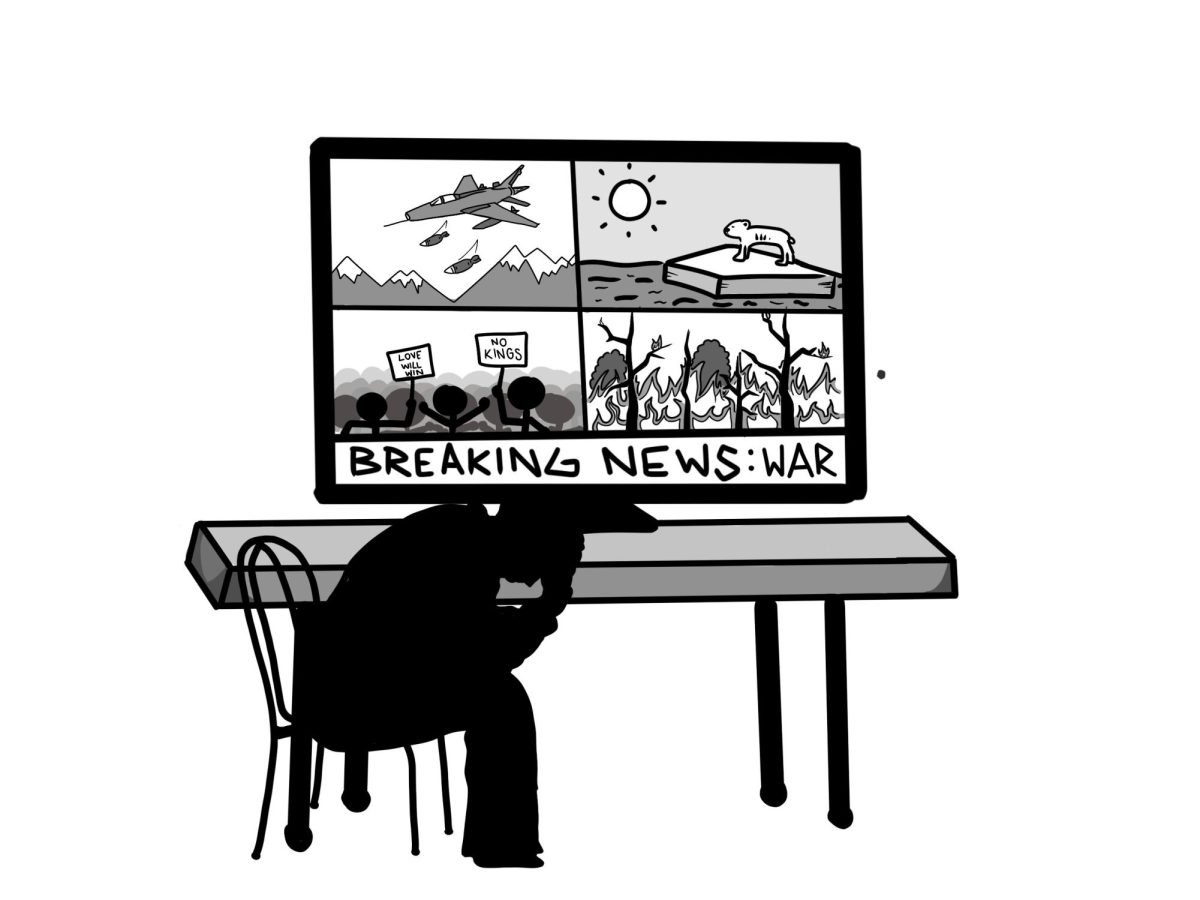
The term “new year, new me” has become a mantra that is repeated every January, representing the widespread belief that personal change should happen all at once. This phrase has been plastered everywhere across social media, news sites and vision boards, suggesting that when the calendar flips, personal transformation is to happen quickly. People make promises to themselves that they’ll go to the gym, eat healthier and save more money, all promises that rarely get completed. By February, these promises begin to disappear. While it’s easy to blame those who fail at their resolutions for lacking discipline, the reality is much more complex. People often fail to fulfill their New Year’s resolution, not because they don’t care, but instead because their goal is shaped by that pressure to make immediate, drastic change. This New Year, we must put an end to this problem and set achievable goals focusing on gradual personal growth.
While the optimism of creating a New Year’s resolution is appealing, that feeling doesn’t last. The hope motivates people to set resolutions that can be unrealistic even from the start. A Forbes Health survey in October 2023 found that 8 percent of people polled had resolutions that lasted under a month, while 21.9 percent and 22.2 percent of voters had their resolutions last two and three months, respectively. By the time four months hit, 13.1 percent of respondents said their resolution was still lasting. Additionally, 66.5 percent of participants said they were planning to make three or more resolutions in the new year, something that is very hard to accomplish. When people try to change too much of themselves at once, it becomes less about self improvement and more about self pressure. Instead of choosing one goal that is realistic and attainable, many people try to change too many things about themselves and treat the turn to the new year like a reset button, hoping to become an entirely new person overnight.
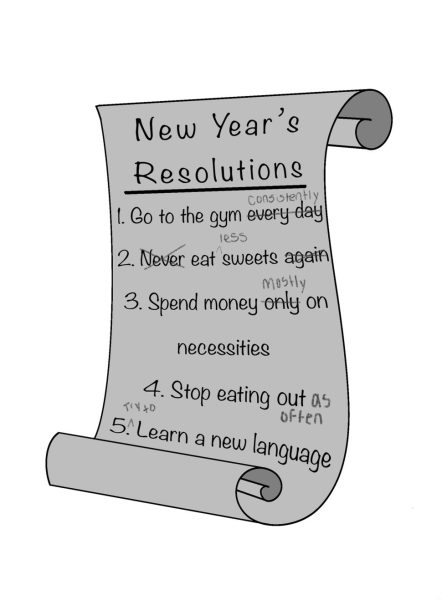
A major reason as to why resolutions aren’t usually successful is that people create goals that are either too extreme or too vague. Saying something along the lines of “I will never eat sweets again” or “I will go to the gym every day of the week” may sound impressive, but in reality is setting a standard that is nearly impossible to maintain long term. Neurologists told Time Magazine that resolutions are most likely to be accomplished when broken down into small, realistic steps. Even with strong intentions at first, motivation can vary over time, and being able to modify your resolution to be more realistic as time passes is the best course of action for having a successful New Year’s resolution.
A lot of this also comes down to impatience. It’s human nature to value immediate reward over long term benefits, which is why it’s so much easier to choose comfort over improvement in the long run. There is a specific term in psychology for this and it’s called temporal discounting. It’s where a smaller but immediate reward has higher value to a large reward that would come down the line with hard work. It explains why skipping just one day at the gym when you committed to going every day seems favorable when you won’t be seeing results for weeks. You’re gaining a smaller, immediate reward in a break, over the larger reward that comes later, of a healthy body. People are expecting instant results, when in reality, that’s not possible. When results aren’t seen immediately, people get let down and assume that they’re failing even if progress is being made slowly.
Psychologically speaking, humans aren’t built to carry all of this at once. On top of that, resolutions have felt so normalized that they feel more like an obligation than a goal. If everyone’s setting resolutions, you should be too. The pressure can push people into choosing resolutions that don’t even fit their values, making them hard to maintain. And when there’s limited early on success, it’s discouraging. Scientists like to compare it to boiling water: “At 70 degrees Fahrenheit, it’s just cool water. At 211 degrees, it’s extremely hot but still not boiling. Only when it reaches 212 degrees does it transform into steam” (PridePoint Health). The point of this analogy is to show that only when you reach a certain point will you see success, showing that even when people are at 211 degrees, they’re quitting because they haven’t seen that visible change, mistaking slow progress for no progress.
Of course there’s still a reason to be making resolutions. Stanford Report features psychologist Kelly McGonigal saying that resolutions allow for people to feel better and uplift themselves; boosting confidence, control and hope. And while McGonigal is completely right, people are still going about them the wrong way, causing very few people to actually feel that way. It’s important to understand that change takes time, and that New Year’s resolutions only work when people commit to them, taking lasting steps because it won’t happen overnight.