On Dec. 13, Brown University joined a list that no campus wants to be on.
Around 4 p.m. EST, a gunman opened fire inside the university’s engineering building during final exam week. Two students were killed and nine others were injured. An economics professor told local media the shooting occurred during a review session led by her 21-year-old teaching assistant.
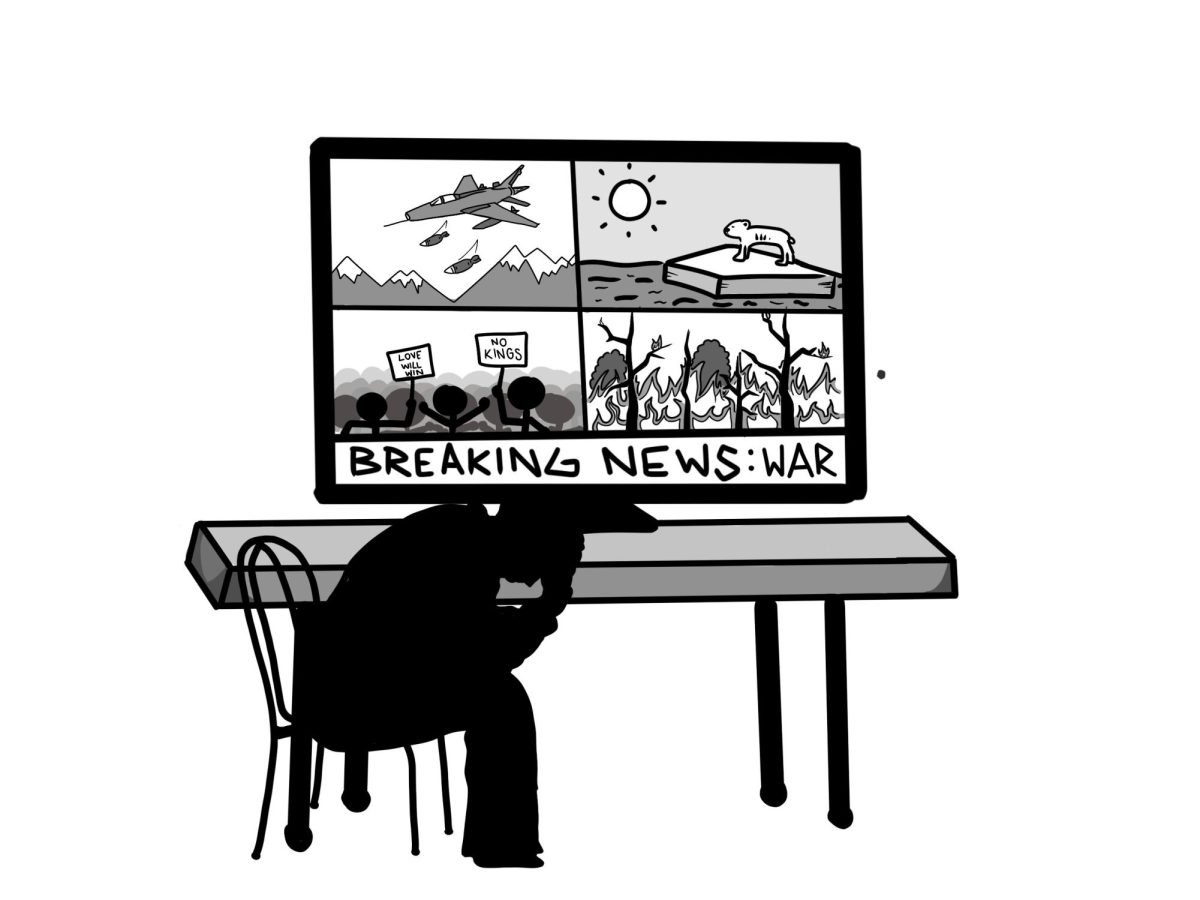
Within minutes, the news spread across social media. The responses followed a familiar script. Crying emojis filled comment sections. Condolences were posted and shared. The reaction was sincere, but predictable.
Between 2012 and 2019, the Washington Post analyzed over 600,000 tweets containing the phrase “thoughts and prayers” and found “its usage often correlates with political views, faith affiliation and positions on gun policy.”
After the 2012 Sandy Hook Elementary School shooting in Connecticut, researchers from Cornell University applied artificial intelligence to analyze 700,000 tweets that expressed public sentiment around the shooting. Here’s what they found:
“Surprisingly, the pro-gun sentiment remains high for a number of days following the event but the anti-gun sentiment quickly falls to pre-event levels. […] The highest pro-gun sentiment is not coming from those with highest gun ownership levels but rather from California, Texas and New York.”
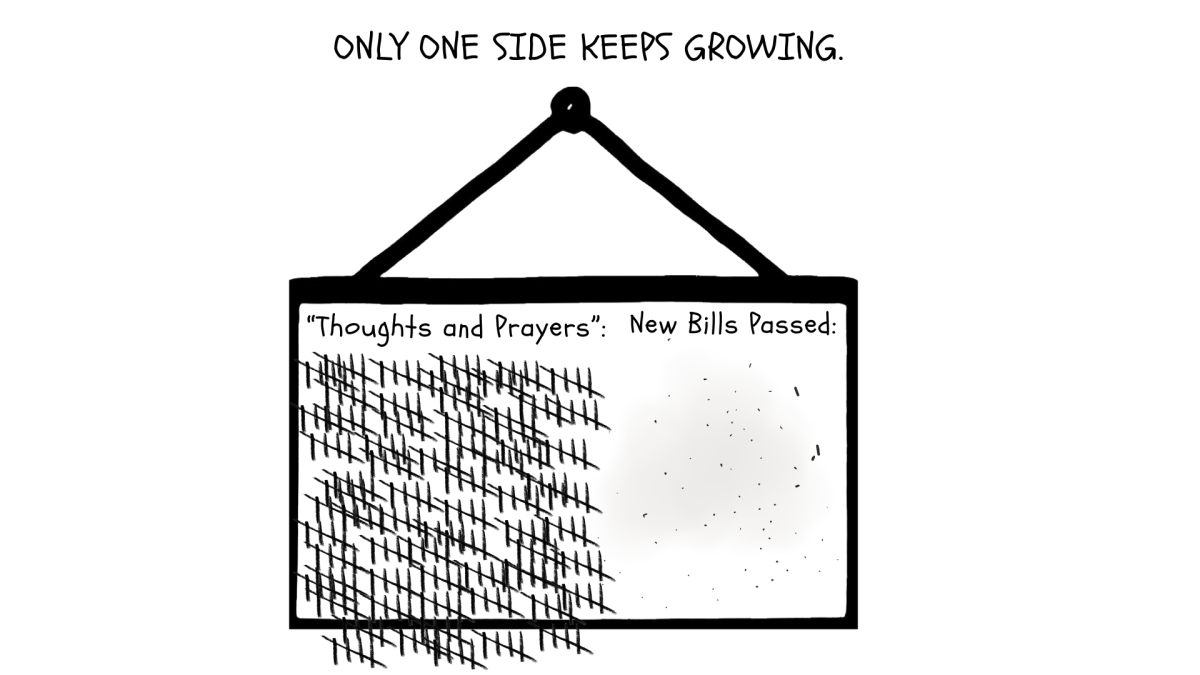
This is not to say that sharing condolences and grief should stop. Sharing your sympathy often draws voters and politicians in and can build solidarity. But when gun reform has such high opposition, your “thoughts and prayers” need to be paired with action.
As a current high school senior, I’ve been practicing intruder drills since kindergarten. In elementary school, teachers tried to make them less frightening. I remember being told the drills were because a skunk had once wandered onto campus and sprayed students. The drills, they said, were just in case “the skunk incident” happened again.
That explanation stopped working at the age of nine. In 2017, during my oldest sister’s first month attending Redwood, she was notified of a message written in a girls’ bathroom stall threatening that a school shooting would occur the next day (The Redwood Bark). It wasn’t a fun dinner table conversation.
Students stayed home from school in fear. Parents voiced their concern. No changes were made.
This year, that same sister began her job as an elementary school teacher, now practicing how to control and protect her own students in the event of a shooting.
California state law requires at least one lockdown-style drill per year, but many districts schedule multiple drills, often two to three annually, as part of their safety routines (California State Assembly, Committee on Education).
We’ve had the drills memorized since before we could even spell ‘intruder.’ It’s been the same routine since elementary school: curl up, stay quiet, keep away from the windows. Each year, administrators walk the halls, checking that all classroom doors are locked. Still, every time a door handle rattled, the classroom would instinctively freeze. Then we would laugh, embarrassed by how easily we jumped. Looking back, there is nothing funny about that fear.
In my freshman year Physical Education class, my teacher taught us to run in a zigzag pattern if we were being chased by a shooter. Some of us actually stood up, practiced on the field and laughed at how strange it felt. In hindsight, there was, again, nothing to laugh about. It is a sad American reality.
It is understandable that when violence feels uncontrollable, expressions of sympathy become the prominent response. ABC News shared that after mass shootings in El Paso, Texas and Dayton, Ohio in 2019, many social media users advocated to “focus on mourning” and argued that it was “too soon to get political”.
But when school shootings have occurred 238 times at K–12 schools since 2018 in the United States (Education Week), there is little distinction between “too soon” and too late. We need real change—fast.
At the national level, President Donald Trump has repeatedly framed gun policy as untouchable. His administration limited background checks for gun buyers and labeled the firearms industry “essential” during the pandemic. In a February executive order, Trump reinstated that “the right to keep and bear arms must not be infringed” (The White House).
Although Marin County likes to consider itself far removed from “that kind” of political agenda, our data tells a more complicated story.
In a 2023 Bark survey in Addressing gun control: A compiled report, students rated both ‘Redwood’s ability to respond to gun violence’ and ‘how safe they feel on campus’ on a scale from zero to 10. The median response for both was five, signaling real local concern. Yet in the 2024 election, 62,594 Marin voters cast ballots for Donald Trump (SF Elections), actively supporting a national agenda that expanded gun access.
When people say gun control is “up to Congress,” they are not wrong. But Congress does not appear on a ballot by accident. Before the general election, candidates go through primaries to see who will represent the county in the U.S. House of Representatives. The voting turnout for the 2024 primary election was approximately 53 percent, the third lowest turnout in the past six statewide primary elections (Office of Marin County). Low participation means fewer voices help decide who will represent the county in the U.S. House, a key body that shapes policies on gun reform.
Those early, overlooked elections quietly determine what choices are available later regarding gun reform policy in Congress. Responsibility begins with local participation and thoughtful research on candidates.
Children practice intruder drills at school. Adults can practice voting at the polls.