Accutane is a prescription drug commonly used by many teenagers in order to clear up their skin from acne. At the same time, many high schoolers, although illegal and unhealthy, also consume alcohol. The California Healthy Kids Survey (CHKS) said that high schoolers, specifically in ninth and eleventh grades, have used alcohol in the past month at rates of 10 and 14 percent.
When a teenager, or anyone, takes Accutane and drinks alcohol at the same time, alcohol’s negative effects multiply and can cause serious damage to the body at a faster rate.
Accutane, the common name for the drug Isotretinoin, is a retinoid medication often used to treat acne by reducing oil production and inflammation. Although Accutane clears up acne for some, it can strain the liver and cause side effects like dry skin and increased cholesterol. An increase in cholesterol can restrict blood flow to the entire body and increase the risk of heart attacks and strokes.
Alcohol, specifically drinking ethanol, is a psychoactive, addictive and toxic substance that acts as a central nervous system depressant. Alcohol slows down brain activity, affecting thoughts, behavior and coordination.
According to ABC NEWS, it is estimated that 500,000 Americans, mostly teenagers, take Accutane annually. CHKS states that 74 percent of high school students have drunk alcohol in their lifetimes. Within the past 30 days of when the survey was administered, 35 percent of students reported binge drinking.
These statistics show the popularity amongst teenagers of taking these two drugs simultaneously; however, teenagers might not realize the harmful effects the drugs can produce if taken together. Both Accutane and alcohol are metabolized by the liver and together can lead to liver inflammation, scarring and even liver failure.
The liver acts as a detox center inside one’s body. Its main job is to break down chemicals and toxins. Both Accutane and alcohol are toxic in large amounts, and when taken together, the liver prioritizes processing the alcohol, which can interfere with the liver’s ability to process other medications, such as Accutane, increasing the risk of damage.
Clarence Chu, a physician assistant at Greenbrae Dermatology, has learned about the effects of these two substances throughout his career practicing dermatology.
“Alcohol and Accutane are not advised [to be taken together] because alcohol is processed by the liver and can cause extra strain on that organ,” Chu said. “Overstraining the liver can show elevated triglycerides in liver function tests when we order lab work.”
Elevated triglycerides signal that there are excessive amounts of fat in the body. This contributes to thickened artery walls, which increases the risk of heart attacks, heart disease and strokes.
Chu said that these health risks are taken very seriously by dermatologists. When a patient states that they are planning on consuming alcohol while they are on Accutane, they are advised to end the treatment immediately.
“We usually tell them not to drink while they’re on Accutane. And if they do [or if] they are going on a trip or a vacation, I actually have them stop their treatment,” Chu said.
As with any medication, prioritizing a doctor’s directions helps keep individuals safe.
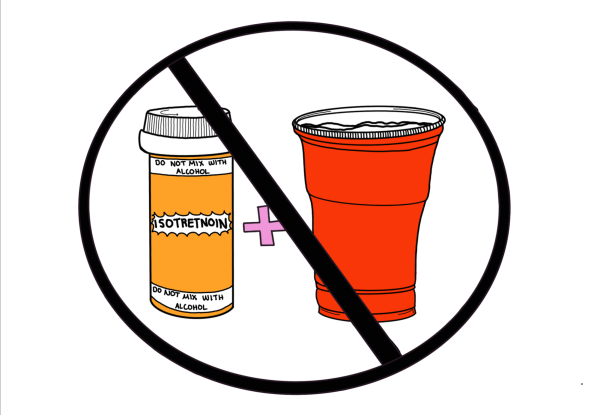
An anonymous Redwood sophomore, who will be referred to as Harley, takes Accutane. Harley explains the social stigma around drinking while on the medication.
“If you’re in a group of people and they’re all drinking, you also want to join in, but you can’t. You could definitely get pressured into doing it,” Harley said.
Harley notices the substance mixing and its commonality among Redwood students.
“I think [mixing substances] is probably very common, just because a lot of teens are on Accutane,” Harley said.
Even though drinking might seem harmless because of its frequent use in social environments, alcohol still increases the risks of serious side effects and long-term damage to health. If someone is taking Accutane, the safest choice they can make is to avoid alcohol and follow their doctor’s guidance.