“It was truly a time of growth. I started as a skinny 95 pound freshman with a few grammar school friends and that was it,” said Redwood alumnus James Clark, class of 1975. “The school in the seventies was at its height in enrollment, 2700 kids—about a thousand more than today’s Redwood. Hallways were jammed, seniors were huge, and classrooms full.”
In the 1970s, Redwood’s halls were packed with students full of energy and community. Today, many say that the student experience has shifted because of increased absences, rising academic pressure, and the influence of technology.
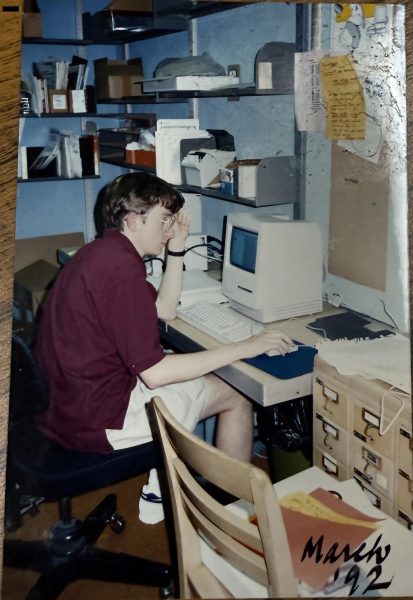
Clark sees both similarities and differences in how Redwood has changed, most notably regarding the use of technology.
“A significant difference is that we were free from the cultural information overload and the effects of social media influencing our lives,” Clark said.“We had no cell phones, no computers, no email, no calculators and no internet. We wrote letters, waited for calls on our home phone and used our brain to figure out math equations, and the library to find answers.”
Another alumna and now science teacher at Redwood Amy Mastromonaco, graduated from Redwood in 2005.
She said that she loved her high school experience because of her great teachers, the opportunity to take many electives and playing varsity soccer all four years. Since she has returned to Redwood, she has observed firsthand how the high school has changed in many ways.
“There were fewer [advanced placement classes] in my day, so it felt like you could really focus on what you want to take,” Mastromonaco said. “College was hard to get into, but now I just feel like it’s way harder and so competitive. I was under stress in high school, but I feel like there’s even more stress now.”
Alumnus of the class of 1994 Jonathan Hirsch now teaches Psychology, Street Law, and Life Lab at Redwood and has noted that many aspects of the high school have remained the same.
“There’s kind of a place for everyone to do their own thing,” Hirsch said. “I think that allowed me to explore my passions and my identity.”
Hirsch said that the perceived expectations of what students “should do” have been raised in comparison to what he experienced as a teen. As a high schooler, Hirsh tried activities such as football and acting, and said how students now feel more pressure surrounding classes and extracurriculars.
“I think Redwood students feel even more pressure to do things they’re supposed to do,” Hirsch said. “There was an academic sense of you’re supposed to do well in school [when I was in school], but that’s gotten way more extreme,” Hirsch said.
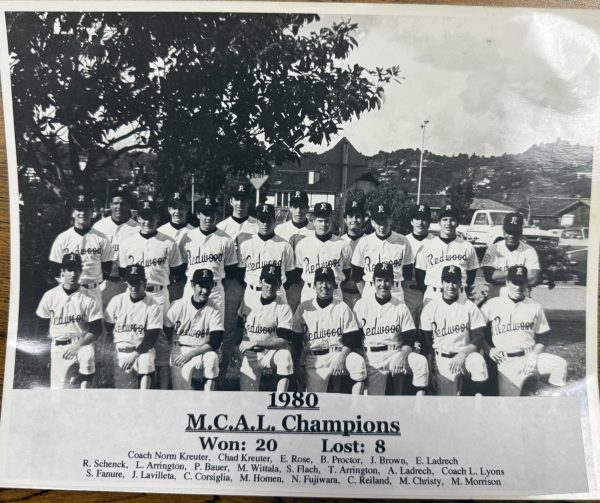
Melissa Boles, alumna and Physics in the Universe teacher, also talked about the increase in academic pressure.
“There wasn’t anything like the kind of pressure to take AP classes that there is now,” Boles said.
Boles remarks that absences have become more common among students compared to when she attended Redwood.
“We have had waves where student attendance got irregular enough to where a lot of students were in trouble [academically],” Boles said.
A current sophomore at Redwood, Sasha Malek said she has enjoyed her high school experience so far because of her friends, being a part of the varsity cheer team and the variety of classes she’s taken. For Malek, however, absences have become a problem and lack of sleep has become one of the main factors for them.
“I feel like I still try to go [to school], even if I’m super tired, [but] there’s some days where I’m so tired that I wouldn’t even be able to focus in class,” Malek said.
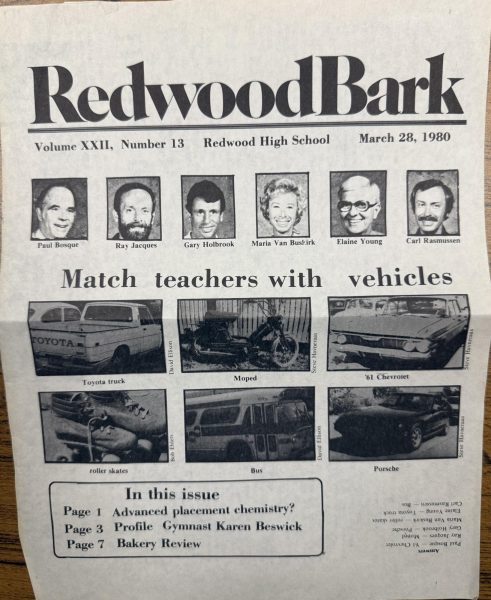
Mark Fainaru-Wada, alumnus from the class of ‘83, who now reports for the Entertainment and Sports Programming Network (ESPN), said that Redwood played an important role in his life.
“I have really fond memories of Redwood and I feel like it really shaped my life in very positive ways,” Fainaru-Wada said. He also noticed how academic pressure has increased. “It’s just so much more competitive,” Fainaru-Wada said.
Although there have been many changes from then to now, the core high school experience has remained the same.
“As I walk down the hallways now and sit on the benches outside, I still feel that 50 years ago was just like today—that the same young adults in high school, just like we were, are still dealing with the challenges of growing up in a changing world,” Clark said.