 Home was everyone’s first place of comfort. Our first ‘space’ is a place where we spend a significant amount of time. Home: where we learn to walk, talk and compute other basic functions. Then came school: the second space, where reading, writing, science and art were taught. As we age, the second space changes from school to one’s place of work. We move between these two spaces our entire lives, but is that all? In 1989, sociologist Ray Oldenburg studied the relationship between people and their involvement in their community, uncovering another layer. He founded the theory of ‘third space’: A place not just to learn how to walk or read, but how to grow.
Since then, sociologists, educators and others interested in human behavior and development have studied this concept. Kari Vogelgesang, educator at the University of Iowa, specializes in child development and how it relates to education and mental health. While researching human behavior, she came across the theory of third spaces, and applied the idea to youth mental health and education.
“These other spaces: libraries, rec centers, cafes [and] parks; these are other areas in our communities in which we engage and also learn more about ourselves, our identity and how we interact with people,” said Vogelgesang.
The lessons one can learn from having a third space normally differ from those learned at school. According to the University of Chicago, “Third places are where we can both affirm our own identities and build empathy for identities different from our own.” Getting out of your comfort zone and exploring a new group of people comes with many benefits.
“[Third spaces] teach us how to interact with people and how to build community and connection with people, and they also become spaces where we can find another layer of support and networking when we’re going through challenging times in our lives,” said Vogelgesang.
According to the U.S. Centers for Disease Control and Prevention (CDC), only 58 percent of teens report always or usually receiving the social and emotional support they need. Where support systems in the first two spaces are lacking, a third space can pick up the slack.
An online group or platform may fill the role of this system. Online support may be helpful to those seeking connections with like-minded individuals.
“When we look at data in relation to the communities that LGBTQ+ students have created online, they’re reporting that those groups are life-changing for them, particularly if they were in rural areas, and they weren’t

able to be around people who you know were part of that community. It was very helpful for them, socially, emotionally [and] mentally,” said Vogelgesang.
Being able to connect with people you relate to online can bring benefits of its own, yet data shows online interactions simply do not reach the same level of positive impact as a physical interaction can bring.
“There’s [also] this other side of things. If you’re only relying on social media or online communities for your social dimension of wellness, we know that that’s actually isolating for some people, and that there is nothing that can replace human connection and presence,” said Vogelgesang.
The qualifications for the space differ, but the core points remain constant. A third space is a place of community, an area someone can frequent and find themselves at ease; a place outside of the house and outside of school where one can gain new experiences. For junior Sophie Levin, her temple fills that space.
“My temple is in the city, so I get to know a bunch of people outside of Marin, and I have grown up with them my whole life. It’s a sense of community wherever I go, because it’s a bunch of people I have known since I was little, who live all over,” said Levin.
Finding a group connected to one’s identity or opinions is not restricted to social media – many bonds are formed from people wanting to physically surround themselves with others they can relate to.
“Spending time with people who share the same culture really gives me a unique experience, and [it’s] something I don’t get at work or school,” said Levin.

Third spaces provide the opportunity to meet new people and work on social skills.
“When I was younger, I was almost forced into making friends with people I didn’t know at the temple. I definitely think that this made my sense of social communication smoother. When I’m somewhere where I have to introduce myself or start a conversation, it comes with ease,” said Levin.
According to Vogelgesang, resilience is a huge benefit of involvement in a third space.
“When you have healthy third spaces for people to go to in a community, oftentimes we see both individual and community resilience, resiliency skills improve. And the reason why is because you create more support networks,” said Vogelgesang.
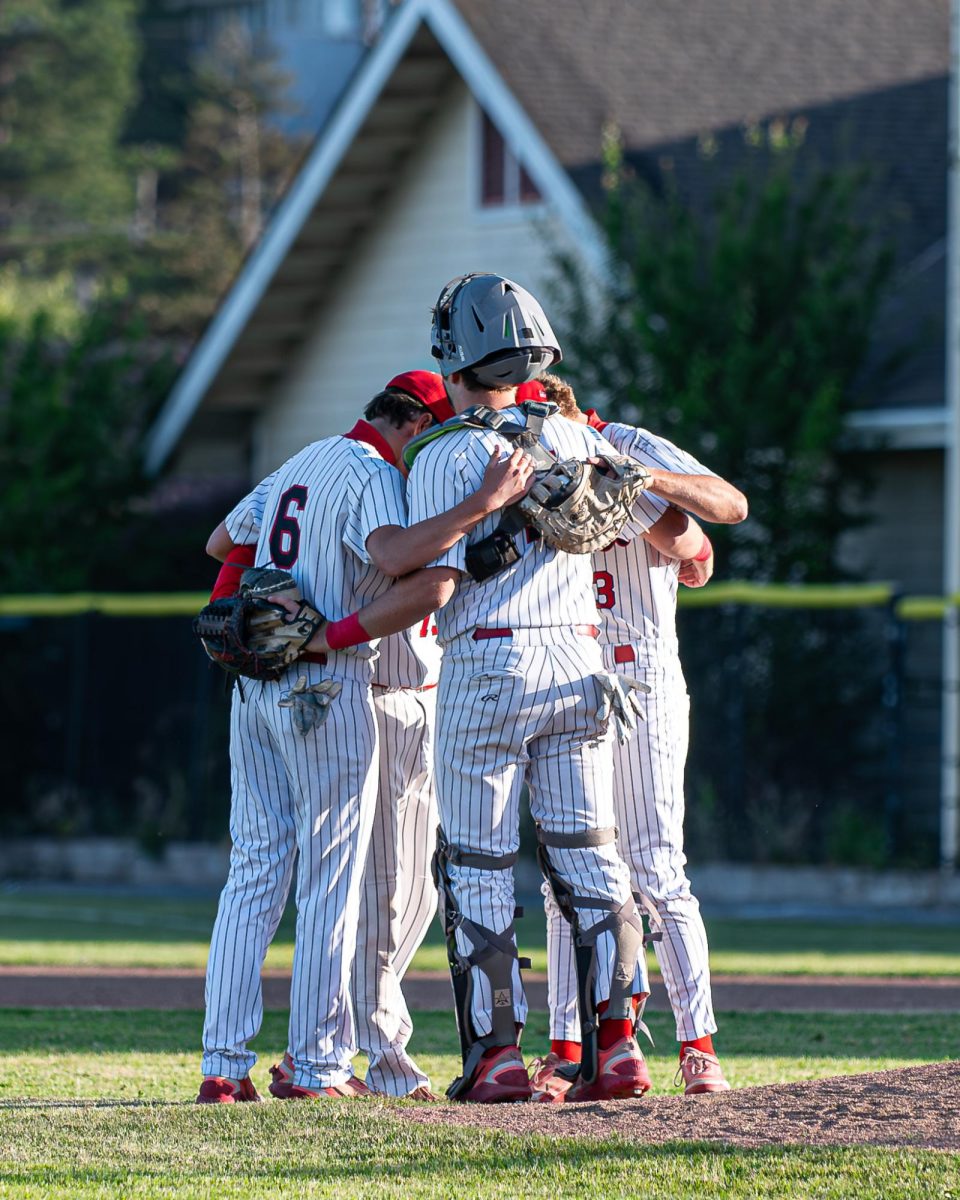
Freshman Bode Ward finds this support network through his volleyball team.
“I’m with my volleyball team every day of the week for club, and I have to drive two hours down to San Jose for that with them, so I’m with (my teammates) often. They’re like brothers. They’re a good support system for me,” said Ward.
Along with additional support, third spaces can help broaden one’s view through contact with new opinions one might not regularly encounter. According to the 2022 Canadian Social Connection Survey, 55.3 percent of participants said meeting new people helped them consider new perspectives.
“Because they are not my normal group of people and most of them live in San Jose, I’m learning a lot about them. I have had to adapt to the new environment, because it’s not anything like what I have experienced at school or at home, but I have learned a lot of new ways of thinking from it,” said Ward.
From social skills to adaptability and new perspectives, third spaces provide opportunities for growth within a community that first and second spaces may not always have.