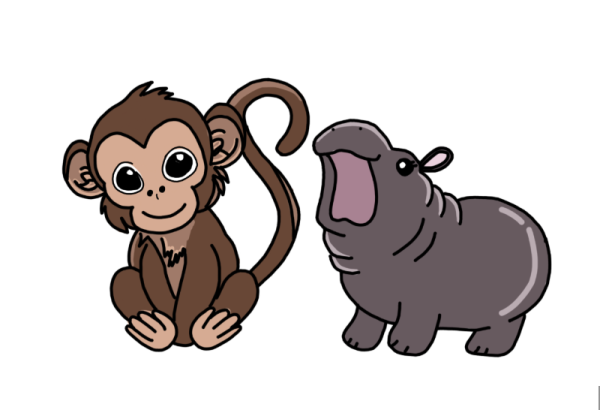
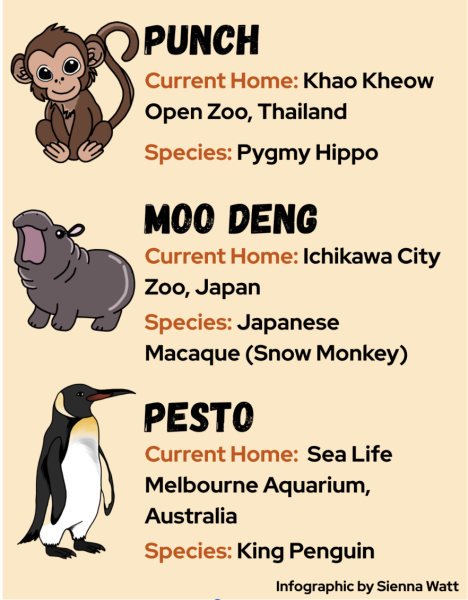
Baby animals have long been a staple of viral internet culture. For example, Punch, a lonely baby monkey, and Moo Deng, a baby pygmy hippo, both became internet sensations. They quickly amassed large fan bases of people following their stories. They both sparked viral reactions, inspired skits on Saturday Night Live and brought people together over shared followings of their lives. The psychology behind why people find these baby animals so exciting can be explained through human instincts, emotional responses and how social media spreads positive content.
One important reason people are drawn to baby animals is a psychological concept studied by scholar and zoologist Konrad Lorenze: humans naturally react to certain features that remind them of human babies. Characteristics like big eyes, round faces, and small bodies make something appear ‘cute’. Lorenze theorized that these characteristics trigger caring and protective feelings because they signal that the creature is vulnerable and needs care. Many baby animals have these traits, including human babies, so they elicit strong emotional reactions. Even though animals like monkeys and hippos are very different, their features can activate this response.
Junior Bradley Nanola, a self-described animal fan and owner of several pets, explained why these animals garner such reactions from people.
“There’s something about baby animals that instantly makes people smile. Even if someone is having a bad day, seeing a tiny animal doing something cute can completely change their mood,” Nanola said.
As Nanola explained, seeing cute animals can release dopamine, the chemical in the brain associated with happiness and rewards. When people watch videos of animals doing cute or funny things, they can experience an emotional boost. The brain essentially associates the animal with a positive feeling, which encourages people to keep watching and engaging with the content.
The desire for positive moments online is another cause of the virality of these animals. Social media often exposes users to stressful news and upsetting events, which can make scrolling feel overwhelming. Watching cute animal videos provides a quick and simple distraction from those topics. For example, videos of Moo Deng playing and learning with her zookeeper give viewers something lighthearted and positive to focus on instead of serious issues.
Junior Charlotte Paul explained how watching baby animal content provides a pleasant break in her algorithm.
“I think when you’re doom scrolling, it can be nice to see some hopeful videos like Punch making friends or M
oo Deng falling around. It’s a nice distraction from other content,” Paul said.
Cute animal videos offer a quick escape from more realistic and uncomfortable content. Watching a small animal learning to walk or play with their caretaker allows people to momentarily relax.
Social media platforms themselves also play a major role in spreading this form of content. Algorithms promote posts that receive strong emotional reactions and interactions such as likes, comments and shares. Because cute baby animals create quick positive reactions, they often perform very well. When a video of a cute baby animal starts to gain traction, the platform’s algorithm pushes it to more users, which can cause it to spread rapidly. This effect creates viral moments for animals like Moo Deng and Punch.
In a digital world filled with stressful news and mindless scrolling
, baby animals can provide momentary happiness and joy. Whether it’s a baby hippo learning to walk or a monkey trying to find friends, these viral animals remind people of the positivity in the world.