After a long, tiring day, a student returns from school, sits on the couch and instead of looking for something new to watch, they return to a “comfort show.” According to a survey conducted by Cabletv.com, 87 percent of Americans have a comfort show. Viewers return to these familiar series because they provide emotional comfort and a break from constant decision-making throughout the day. In a fast-paced and unpredictable world, revisiting familiar characters and storylines creates a sense of relaxation and control.
While exploring new areas of what’s on TV can feel fun and exciting, along with unknown storylines also comes a load of stress. The stress in finding something new often leads people back to their “comfort show.” This phenomenon is backed up by the mere exposure effect: a psychological idea suggesting that repeated exposure to a stimulus (a person, show or product) creates familiarity and preference.
Perceptual fluency refers to how easily the brain processes information. People often associate this ease with positive emotions, which makes familiar content more enjoyable to watch. This means that when people watch Gilmore Girls again for the 20th time their brain knows exactly what’s going to happen, and doesn’t have to do hard work trying to figure it out.
Psychologist and alumna Kathleen Someah specializes in adolescents and adults struggling with anxiety, depression and other neurodivergent conditions. She helps to guide them through finding ways to calm big emotions, regulate their feelings and find a sense of calm. Someah explains how in moments of uncertainty the brain can spiral and that’s when people want to find a sense of control. Control can stem from returning to something they enjoy, like a TV show.
“I think a lot of times, people react to uncertainty by bringing familiarity and almost trying to bring certainty to it. They might do that by overly planning or having to-do lists, trying to bring routine and predictability by having a schedule. Other times, people will search for things that feel comforting [where] they see a lot of control, because things are so uncertain and unpredictable,” Someah said. “They’re trying to control their feelings, perhaps by watching a movie or doing something that they know harnesses a particular emotion or evokes an emotion that’s positive.”
Furthermore, Someah explains the psychological side to this never-ending pull that keeps bringing people back to watch more. Entertainment ties into how people manage their stress levels when living in a society where life is often unpredictable.
“In terms of a show or a movie, the part of our brain that’s responsible for storing memories and encoding feelings is probably increasingly activated. When something’s predictable, it usually means that we’ve experienced it at one point in our life, [meaning we] also have a memory associated with it. If it’s a positive memory, then the predictability is impacting our brain in a positive way. When things are predictable in terms of life experiences, it means that there’s less space for anxiety to exist,” Someah said.
Students are one of the main groups who find themselves going back to the same shows. Junior Hailey Goldman has found comfort in going back to the show Grey’s Anatomy. She rewatches it at least once or twice a year.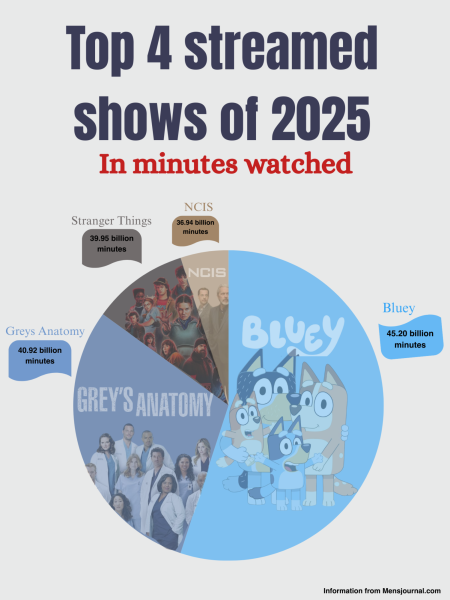
“It’s a familiarity that I like,” Goldman said. “I like relying on knowing what’s going to happen and not being surprised.”
Being able to return to something familiar provides a healthy escape from the unpredictability of the world and something that remains constant in one’s life. Even when going to try something new, there can always be the bubble of comfort to return to.
“I like something new, and then I like going back to something I know,” Goldman said.
According to a March Bark survey, 44 percent of students stated their main reason for rewatching a show was because of comfort and predictability. Someah explains what lures students and why most return to something familiar, instead of searching for something new and exciting to watch.
“A lot of times people are looking for a sense of nostalgia. They’re feeling nostalgic for a time when things were easy or less complex, more simple, less stressful. There are fewer demands on them, and so they’re watching the shows that remind them of those times,” Someah said. “They’re almost accessing memories and feelings by watching a particular show.”
Additionally, something that also encourages people to rewatch shows is the characters. After spending hours being involved in characters’ lives, it feels as if one almost knows them personally. This is called a parasocial relationship: a one-sided psychological bond where people invest time and energy into a media figure or character. According to Thriveworks, 51 percent of Americans have been in a parasocial relationship, and almost 10 percent of Americans report having negative mental health effects from celebrity deaths.
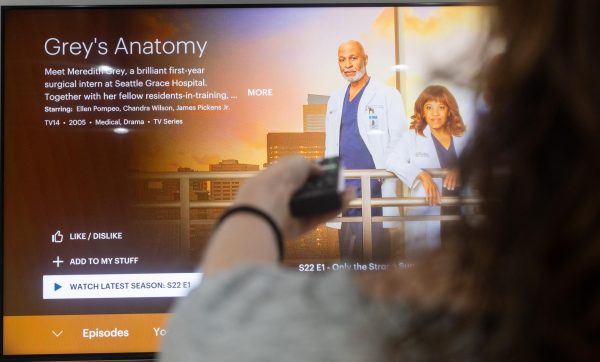
In Goldman’s case, she really connected with Eric Dane, who played Mark Sloan in Grey’s Anatomy and recently passed away.
“I was really, really upset when [Eric Dane] died,” Goldman said. “I had a really emotional time, and I still cry thinking about it.”
A comfort show can last in a person’s life through numerous stages, which leads them to create deep bonds with characters, as if they know them as real people. The celebrities and actors, such as Eric Dane, who brought comfort and consistency to people’s lives, are outputs from the connection that sparks from rewatching a TV show.
Someah illustrates the idea that there are many outlets to relieving overwhelming feelings, and that, mainly, finding something familiar to return to can be one of the best options.
“[Comfort shows] can simplify our feelings and emotions. If I’m in a really unpredictable situation, my imagination is just going haywire, and so are my feelings. I might go sit in a familiar place that evokes a particularly calm feeling. I might eat a certain food that makes me feel cozy and nostalgic for a simpler time. It can help turn down the volume on that external noise that is anxiety, stress,‘what ifs’ and catastrophic thinking,” Someah said.
Having a comfort show gives students an outlet to escape. Returning to a show for the fifth time may seem monotonous, but this routine offers a sense of stability. As streaming platforms make rewatching easier than ever, comfort shows remain a common way for viewers to unwind and revisit familiar stories.