“In the end, we will remember not the words of our enemies, but the silence of our friends.” Dr. Martin Luther King Junior first spoke these words during a Canadian radio broadcast to an awestruck audience, and since then, they have echoed around the world for decades. These words can be found on the walls of classrooms, carved in gold on plaques and in the hearts of people who strive for justice all around our country, all because of their timeless message; being a bystander to a harmful event can cause as much harm as perpetrating it.
At first, choosing not to intervene in a harmful event may seem like a neutral action, but in reality, being a bystander to those events can normalize and enable the harm they cause. Dr. King saw this when civil rights activists having their bones broken by batons and bricks was standard and accepted, largely due to the silence of many of his fellow Americans. We see this today as millions of people each year face harassment, bullying and straight-up cruelty due to the violence of some and the silence of most of their peers.
The National Center for Education Statistics found that 19 percent of students ages 12-18 reported being bullied. This 19 percent is made up of your peers in high school and younger siblings in middle school. As you walk through the halls, there is a 19 percent chance that the person you just brushed shoulders with is grappling with the harmful effects that bullying has had on their mental health. However, you can lower this percentage with your courage to speak up. A study by researcher Dorothy Espelage found that “When bystanders to bullying intervene, bullying stops within 10 seconds 57 percent of the time.” If we all flipped that coin with 57 percent odds of stopping a harmful act of bullying by intervening in these acts when we had the chance to, the heads of 19 percent of students in Redwood’s halls might be held a little higher.
However, flipping this coin of intervention is harder than it seems due to what is known in psychology as the “bystander effect.” This effect was summarized by Psychology Today as a phenomenon where “The greater the number of bystanders, the less likely it is for any one of them to provide help to a person in distress. People are more likely to take action in a crisis when there are few or no other witnesses present.” This effect often causes bystanders who witness a harmful act not to intervene when large numbers of other bystanders are present.
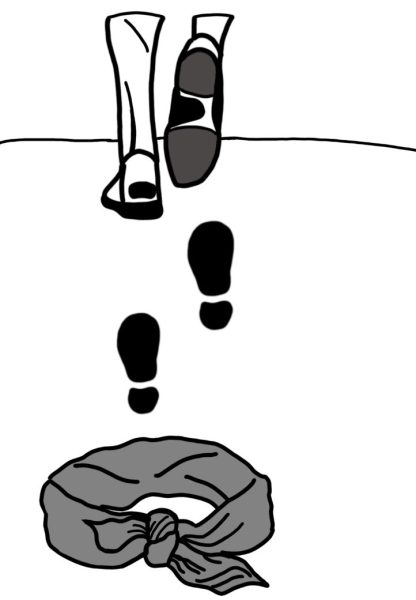
The bystander effect mainly occurs because of a phenomenon known as pluralistic ignorance. Pluralistic ignorance occurs when, after witnessing other bystanders in a crowd not intervening in a harmful situation, individuals assume that they shouldn’t take action in said situation since others in the group aren’t doing so. This causes bystanders not to intervene out of fear that they’re making the wrong decision by taking action, and going against “the herd.”
Having the courage to overcome the fear caused by the bystander effect is difficult. Still, by knowing how to step up as a bystander in harmful situations, you can be more confident in your ability to intervene. Cambridge University’s Breaking the Silence Initiative, a program to prevent sexual assault and harassment, recommends that bystanders use one of the 4 Ds when intervening in a harmful situation. If you feel confident enough, take 1) direct action by directly confronting the perpetrator and/or comforting the victim; 2) distract the perpetrator by asking a question, starting a conversation, spilling a drink, or anything else that takes their attention away from the victim so they can get away; if you don’t feel confident in your ability to help, 3) delegate taking action to somebody more suited to intervene such as a friend or a teacher; or if the situation is too dangerous to intervene in any way, 4) delay taking action and comfort the victim and/or reach out to proper authorities after the event has passed. If you keep these 4 Ds in mind, you will always have a starting point for intervening when you see something you know isn’t right.
We aren’t all perpetrators. But we inadvertently allow them to cause harm when we don’t intervene in harmful situations. Dr. King’s movement was able to change the fabric of our government because of the bravery of ordinary people who had once walked through school hallways that looked just like ours, bumping shoulders with people wearing the same backpacks that we do. The only difference between them and us is that they saw the injustice of living under the oppression of our Jim Crow era government and chose to take action themselves, demanding change. Whatever injustice you see, whether it’s somebody getting bullied in the hallways or something much bigger, I encourage you to step up from the sidelines and make our world into the one you want it to be.