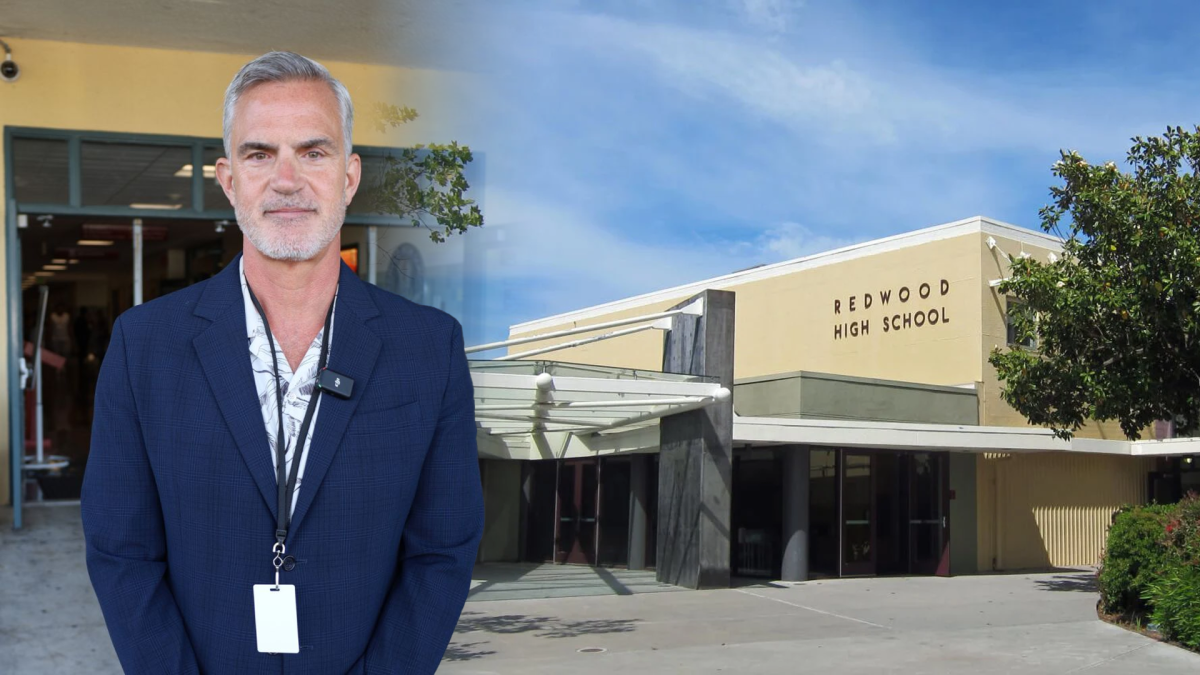
Tamalpais Union High School District (TUHSD) board trustees voted 3-2 to implement a phone-free school policy starting August of 2026 using NuKase lockable phone pouches on the Archie, Redwood and Tamalpais High campuses, as well as lockable phone caddies on the Alternative Education sites at the April 14 open session meeting.
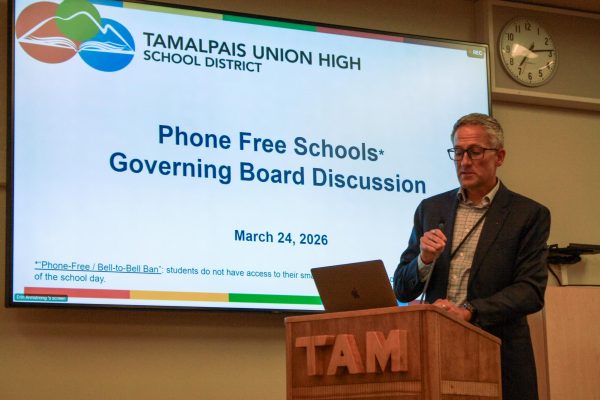
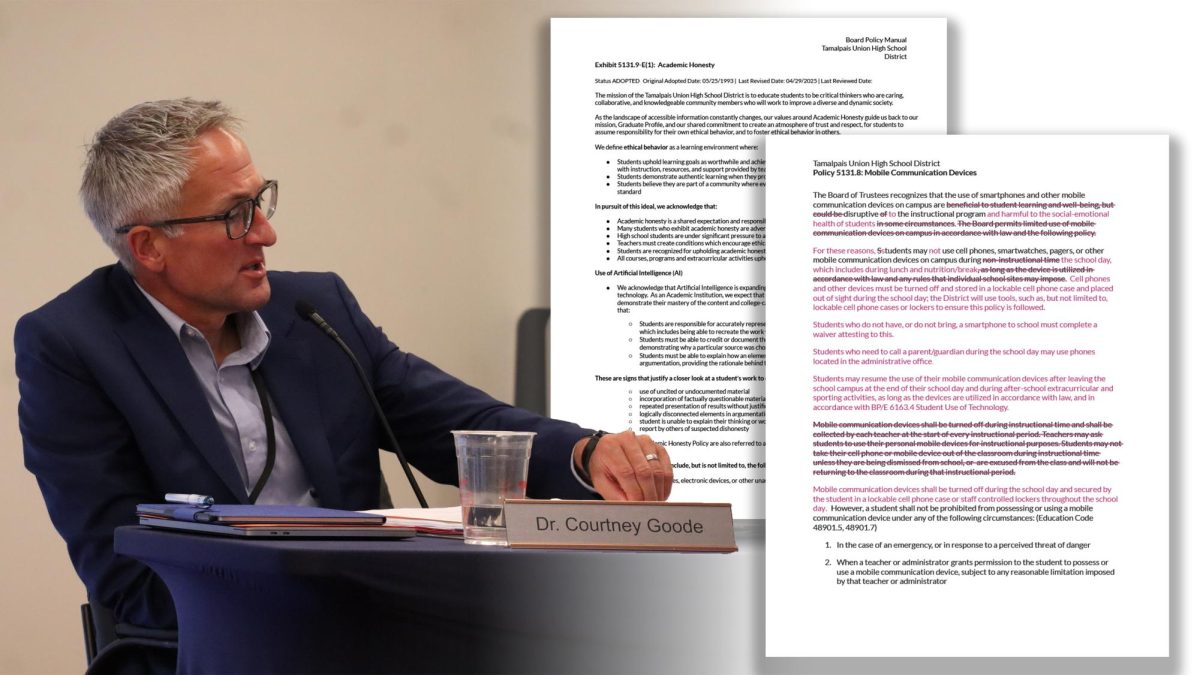
Superintendent Courtney Goode recommended the phone free policy to the TUHSD board. In his presentation, Goode said that there were three universal truths about smart phones and social media: smartphones/social media are addictive, harm students mental health and impair student learning.
“This conversation is not about our current policy not being implemented; it’s largely effective in keeping phones out of students’ hands,” Goode said. “Rather, this is a conversation about how our current policy does not go far enough to mitigate against the negative impact of those three universal truths.”
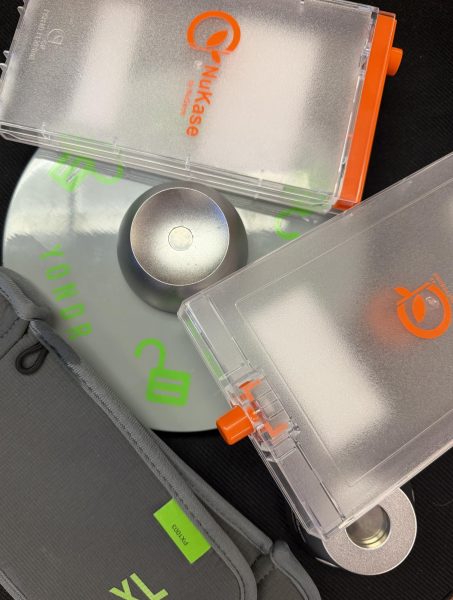
NuKase, a lockable hard-shell phone case, will cost the district $104,000 at the first purchase and anywhere from $0-10,000 each year after. They are a cheaper alternative to the previously recommended Yondr pouches, saving $41,000 initially and $20,000-30,000 year over year.
“There’s a relatively sizable, one time cost associated with them, although NuKase is approximately $45,000 less than Yondr. I want to emphasize, though, that there’s a cost in not doing anything in terms of diminished mental health, diminished learning, for our kids,” Goode said.
Goode said that these funds would by no means come from the same pool of money used to fund district staff.
“I cannot emphasize this enough, we are not sacrificing additional teachers and staff to possibly make this purchase. Salaried employees are an ongoing cost, not a one time cost. Purchasing these devices would be a one time cost,” Goode said.
Although there was a majority in favor of phone free schools, there is still no policy for implementation.
Board President Cynthia Roenisch voted for the policy as she believes it is her responsibility to do so as an elected representative.
“My obligation is, quite frankly, it’s not to make students happy, it’s not to make parents happy,” Roenisch said. “It’s to do the best job according to what I said I got elected for.”
In his presentation, Goode explained that the use of smartphones and social media during the school day doesn’t allow new concepts to be fully etched into the brain, and when calculated equates to a loss of around 11hours of teaching in a week, or 56 days of school over an academic year.
“I’d like to apologize to the students that we’ve deprived of 150 days of education over the last three years, an additional 150 days of education and focus and brain growth that you could have had,” Roenisch said in reference to the data provided by Goode.
Goode said he is not worried about what he along with a team of district staff can create.
“We’re not reinventing the wheel. I believe there’s a lot of smart people in this district that can pick up and implement what other districts have done and put in play here,” Goode said.
Trustee Emily Uhlhorn, despite being in favor of the concept of phone free schools, voted against the
implementation policy, as she did not agree with spending over $100,000 to achieve said goal.
“I think we’re putting the cart before the horse to say that we’re going to go spend $100,000 when we don’t have a policy for this, and we don’t have an implementation plan,” Uhlhorn said. “I would like to personally be there before saying that I would want to vote to spend $100,000.”
Ida Green, another trustee who voted against the implementation, simply doesn’t believe this is a matter for the board to be involved in.
“For us to be having this conversation today in 2026, is just mind-boggling for me, because truly I feel like this is a parent-child issue,” Green said.
Jennifer Holden, one of the three votes in favor of a bell-to-bell ban, said that she is uncomfortable about not changing the current policy especially from a legal standpoint and all of the recent court hearings regarding social media’s dangers.
“We are all on record saying that we understand those universal truths, and we agree with them, and I think we would be so negligent if we didn’t do this. We’d be not only negligent to the students, but negligent to the financial well-being of our district. I would not feel comfortable with that,” Holden said.
![Assistant Superintendent of Business and Operations Corbett Elsen presented an updated budget proposal for the 2026-27 fiscal year to the Tamalpais Union High School District (TUHSD) board of trustees on Tuesday, June 16.
Elsen presented an in-depth analysis of the district’s revenues, expenditures, future outlooks and the global and economic uncertainties affecting the district's revenue due to inflation and the war in Iran.
Because TUHSD is a basic-aid district, Elsen explained the significance of the housing market, stressing the gravity of the district’s financial situation as a result of lower demand.
“This is the bread and butter of our revenue: property tax revenues, [projected] to bring in over $93 million,” Elsen said, adding, “But ... we have decreased our revenue growth rate [projections].”
Elsen will return to the board of trustees on June 23, where the board will take formal action to adopt the proposed budget. To learn more about the updated budget proposal from the meeting, visit the June 16 TUHSD Gamut Online agenda.](https://redwoodbark.org/wp-content/uploads/2026/06/snapshot-1200x675.png)