When junior Erin Macmillin wakes up feeling sick, her first instinct isn’t to rest, it’s to check what she’d be missing.
“Every class pretty much expects you to be responsible for [catching up] by yourself, which is reasonable, but on top of current work, it is just a lot,” Macmillin said. “I find it’s a lot easier to just suck it up and go to school.”
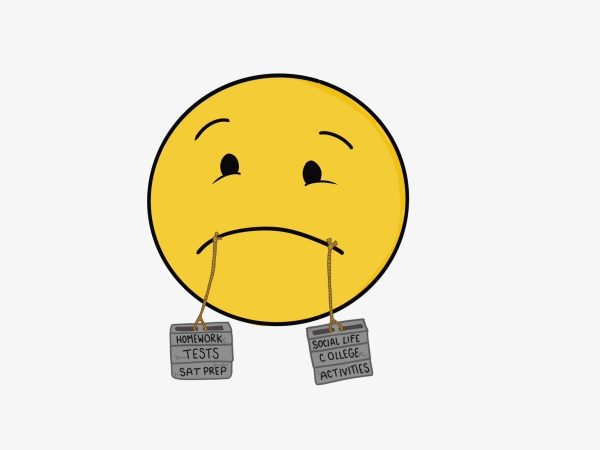
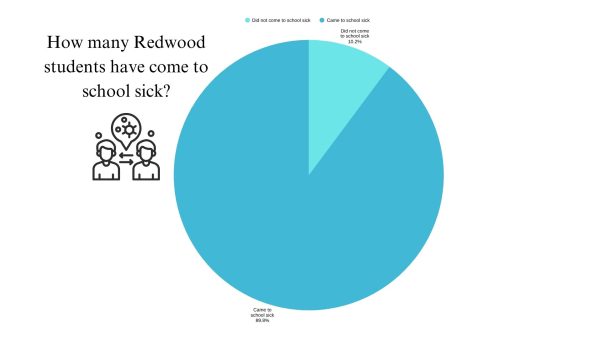
Macmillin’s experience is far from unique. A March Bark survey found that 88 percent of students have come to school sick. For many, this decision doesn’t stem from laziness or a love for learning; it stems from fear. Fear of falling behind in an academic environment where a single missed day can turn into what feels like an avalanche of homework.
School counselor Ian Scott regularly sees students push through sickness rather than miss a day of school.
“What often happens is [students say], ‘Well, I’ve been sick, but there is this test or lab that I really had to get to, so I went to just this one period of the day,’” Scott said. “Your learning is diminished when you’re not feeling well. You’re also exposing your peers to [your sickness] and putting them
potentially in that same place.”
Despite these drawbacks, many students still choose to come to school. Macmillin described her own experience with this phenomenon.
“I honestly fall behind in school a lot, especially in classes where you don’t have to turn things in,” Macmillin said. “For example, [for] the AP US History readings, I’ll just not do [them], and then I’ll fall more and more behind. Then I’ll care less and less, because it’s a more daunting pile of work to tackle. So then it kind of just is in the back of my mind, and starting it feels even harder than just putting it off more.”
Scott echoed this sentiment; he said that for many students, the pressure to stay caught up is part of why missing school can feel so stressful. When assignments begin to accumulate, the growing workload can become overwhelming and make it harder for students to re-engage and catch up in the class.
“Sometimes students fall behind, and then they feel ashamed to go into that class or to talk to that teacher, and that often can create a snowball effect of now avoiding, avoiding, avoiding,” Scott said.
Psychology teacher Jonathon Hirsch described how absences tend to multiply once students get into a hole of being behind.
“Even if you go from showing up 99 percent of the time to like 80 percent of the time, most people don’t have the intellect and skills and habits to fill in that other 20 percent to the point where, and this is what we see with anyone who’s chronically absent, the absences tend to stack because they’re gone for a week, and then people have anxiety about coming back, and then they don’t want to come back, so they don’t come back,” Hirsch said.

For students who are already stretched thin, this cycle is exactly what they are trying to avoid by dragging themselves to school when they are sick.
A study published in Personality and Individual Differences found that procrastination and emotional difficulty reinforce each other over time, creating the vicious cycle that Macmillin and Scott both see. In the same March Bark survey, 92 percent of students said that school has become at least somewhat more stressful since middle school, with 61 percent saying it has become much more stressful.
Macmillin traced part of that stress to the change in how school is structured.
“At my middle school, the only grades were proficient, approaching and exceeding. There were no letter grades, and I definitely think that at the time I was annoyed by it, but it really did kind of take my focus away from the grades and [place it] more [on] the content,” Macmillin said.
This stress for students can also stem from the expectations generated by the community around them. Scott noted that he hears students frequently compare themselves to their peers.
“Students feel like, ‘Well, if my friend is saying that they’re going to apply to these 10 challenging schools and they’ve been doing all these things, I want to keep up with them.’ There is not anyone saying you need to, but there is a sense of peer pressure to achieve at that level,” Scott said.
Scott also noted the effect that living in an affluent area, like Marin, can have on students’ mental competitiveness.
“[We live] in an affluent area where many [people’s] parents went to college, maybe went to grad school,” Scott said. “ Sometimes it’s simply students knowing that their parents went to a selective university, like Brown, Harvard, University of Chicago [or] whatever, and so there’s a sense of, ‘hey, I need to accomplish at the level of my parents.’”
Hirsch has been affiliated with Redwood since 1990, first as a student, then as a teacher, an
d has noticed this academic intensity grow over time.
“There were always students who felt that way, who cared in that way, who were super intense about it. I think Redwood’s always had that culture to one degree or another. But it’s definitely become more pervasive since then. It’s more of a social norm. More of a majority now,” Hirsch said.
That culture shift shows up in students’ decisions to stay home or go to school while sick. Hirsch acknowledged the complexity of those decisions.
“There’s a difference between coming to school when you have a little bit of a cold, and coming to school when you have a 102 fever. But it’s tough. Kids don’t know that,” Hirsch said.
With this harsh and intense academic pressure on students, it’s no surprise that many decide to show up sick rather than risk missing class. Until school culture shifts from focusing on grades and college to learning and growing, students will continue to show up to school sick, tissues and cough drops in hand.