
Videos promising the perfect jawline or cheekbones are taking over TikTok, driving the viral trend known as “looksmaxxing,” a popularized form of content that focuses on maximizing physical attractiveness. The trend, geared towards young males, but reaching all audiences, suggests ways to improve perceived attractiveness and how to become as masculine as possible through specific facial features and bone structure.
Advice on how to looksmax on social media ranges from improving physical health and taking care of personal hygiene to extreme, unrealistic ways to “improve” appearance, capitalizing on insecurities shared by men. These may include suggesting peptide and other drug use, encouraging plastic surgery, as well as recommending “bone smashing,” a popularized term which refers to inducing microfractures on your cheekbones using a weighted tool, making your bones grow back stronger. Some creators even promote a ranking system where one is ranked on a scale by facial structure and features. The dangerous side to looksmaxxing creates pressure to attain the highest of beauty standards and rank high on the scale, encouraging unhealthy comparison to others and creating one specific look that meets the “ideal” male aesthetic. This extreme form of content strengthens the already widely internalized idea that self worth correlates with physical appearance.

In a study done by the National Library of Medicine, 89.3 percent of the teens in the study used TikTok, and reported higher levels of social comparison and lower body image scores compared to non-users. This suggests that content on social media heavily influences feelings about appearance, meaning viewers can be easily influenced by what they see online. While the looksmaxxing trend can encourage healthy discipline to improve health or for personal growth, many of the videos stem from insecurity. Something that viewers may overlook is that confidence and insecurity can appear very similar in content, despite being rooted in very different reasons.
Many looksmaxxing creators show results that are unachievable naturally for some, indirectly encouraging people to believe plastic surgery is their only option. In fact, about 70 percent of women and 60 percent of men reported that dissatisfaction in their bodies led them to consider cosmetic procedures, according to a study done by PubMed. Guides to self improvement found online have a wide range of content, but looksmaxxing has brought a new, “inherently dangerous” side to social media, argues director of the Eating Disorder Program at the University of Southern California Dr. Staurt Murray.
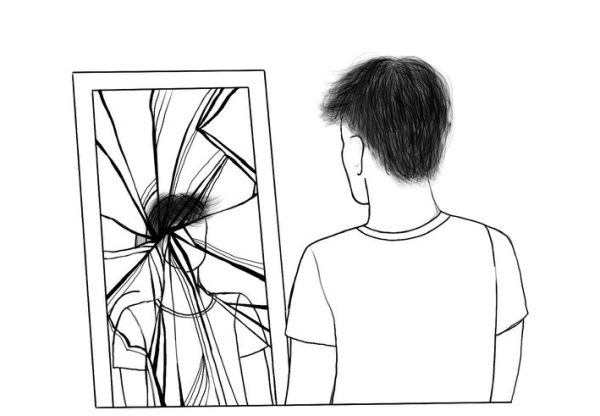
“If we fall into the trap of dissatisfaction and low self-esteem, if you’re diluting yourself down to a number or a skin tone, or an angular tilt of your face, it reduces your value as a person. We want men to focus on more sustainable ways to generate their self-esteem and identity,” Murray told BBC news.
According to a January Bark survey, 46 percent of students find that looksmaxxing content can actually increase insecurity instead of enhancing confidence. Though the goal of looksmaxxing is to motivate viewers to look and feel their best, nearly half of the student population report the opposite effect. The trend has the tendency to reinforce insecurity by creating a narrow beauty standard that many can’t achieve naturally. In contrast, senior Jacob Katz posts a different form of content on his Tiktok account, @jkatz___, displaying to viewers his progress in the gym and showing that improvement can be achieved naturally. Katz notes that looksmaxxing creators are posting for different reasons than him. The intense side of looksmaxxing is motivated by insecurity, and using physical changes as a way to prove worth to themselves and others.
“I’m trying to gain the platform to help other kids [that were] like me. In freshman year and eighth grade, I would often feel down about myself and discouraged to want to change. But I want to show [through my content] that you can change one day at a time,” Katz said. “What I’m trying to do [with my videos] is use myself as an example to hopefully help other people in the long run. A lot of looksmaxxing content [doesn’t try to inspire viewers], and just tries to show how much they’ve improved their facial structure. There’s a lot more ego presented in [usual] looksmaxxing content.”
Katz has observed that looksmaxxing posts can push people to risk their health to mold themselves to unrealistic appearance standards.
“There are some extreme people I’ve heard of. One guy drinks a gallon of milk and has a bunch of sugar everyday to make his bones thicker and his jaw more appealing, and he does bonesmashing which doesn’t sound healthy,” Katz said. “People who choose the route of looksmaxxing like [content creator] @ClavicularLiveYT [on Youtube] will even do methamphetamine to look better.”
In an interview with Fortune, clinical psychologist and founder of the Hildebrandt Laboratory at the Icahn School of Medicine Tom Hildebrandt expressed deep concern for the trend, and he finds that online advice and criticism can have negative effects on viewers.
“Psychologically, it’s essentially an erosion of the sense of self,” Hildebrandt said. “It’s like, ‘The more I get feedback that I’m not good enough, the more I consume it. And then, I trade my attention, my time and sometimes my money and resources to give up my current identity in pursuit of this other one.’”
In addition to this, not all looksmaxxing creators are completely transparent, as some fail to inform their viewers of the full truth regarding what they do to enhance their looks.
“Doing lymphatic drainage and [other facial massages] have been proven to help, but it can also be drugs and other things [creators] are not sharing. A lot of stuff is hidden,” Katz said. “[Steroid and peptide use] online, especially from people who aren’t transparent about [their usage], can make people’s self confidence drop even more, and make them [question], ‘How do I look so much worse than them?’ and it’s because it’s not [done] naturally.”
Katz pointed out that some looksmaxxing creators use peptides which can help your skin, your bones, your recovery and help you gain more muscle mass, making viewers feel discouraged that they haven’t achieved that look naturally. Viewers can be easily manipulated by this content, making them believe if they risk their health, they will look like these creators, though a lot may go on behind the scenes.
“As long as [self improvement] is done in the right state of mind and using the proper technique, it’s a great idea. Health is the most important thing; mental health and physical health. You shouldn’t be putting anything unnatural into your body or doing anything with a negative mindset. It can be really positive if you’re doing it for your own personal growth, and you’re doing it naturally through hard work.”