On Jan. 15, a group of students, activists and assembly members gathered outside the Capitol Building in Sacramento, California, to support an anti-fast fashion initiative. Behind the supporters were 4,500 pounds of used clothing piled on the steps of the building. This wasn’t a random number, either. It’s the amount of textile waste Californians dispose of in just one minute.
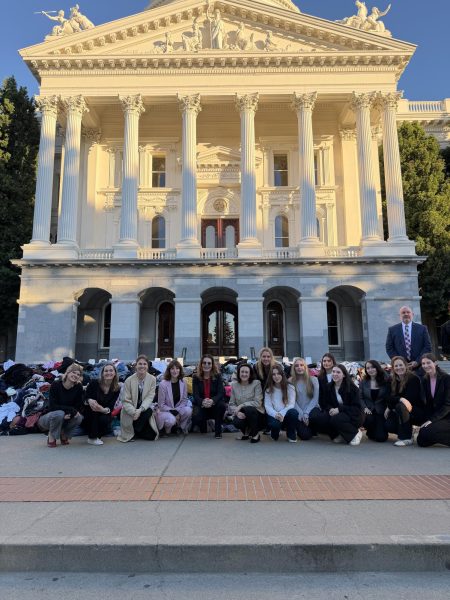
The group outside the Capitol building consisted of supporters of California’s Fashion Environmental Accountability Act (AB 405), a proposed bill that aims to hold major fashion brands, typically referred to as “fashion sellers,” accountable for their environmental impacts. If successful, it would require fashion sellers with an annual global revenue exceeding $100 million to comply with a number of policies, such as agreeing to reduce their greenhouse gas emissions in line with the Paris agreement.
Redwood parent Betina Baumgarten has been a sponsor of AB 405 since before its initial introduction in 2025.
“[With the lobby day], we wanted to raise awareness around not only what the overproduction problem is, but how AB 405, unlike other bills, really seeks to address how things are manufactured and what goes into manufacturing,” Baumgarten said.
Another requirement of AB 405 is for fashion sellers to have complete supply-chain transparency. Companies would have to map at least 50 percent of their supply chain by 2027 and 75 percent by 2030. This aims to directly monitor the amount of potentially harmful chemicals being used in clothing, since there have been no previous regulations.
“There’s lead and all these chemicals on our clothing [that are] being absorbed into our skin,” Baumgarten said. “This is why we’re seeing such huge increases in all of these horrific diseases, because there are no regulations around the chemical thresholds in our clothing.”
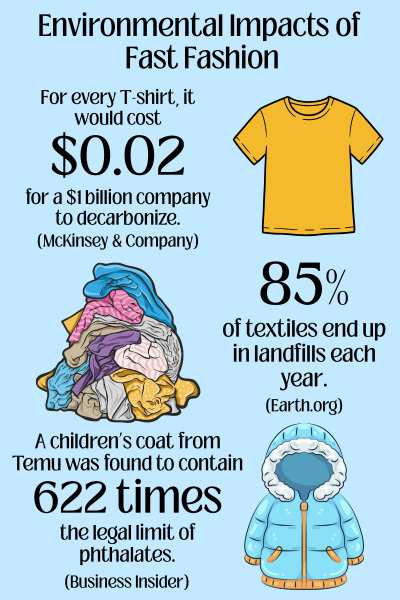
Many fashion companies use harmful chemicals in the manufacturing of their clothing. According to a recent report by Greenpeace, 32 percent of clothes from Shein were found to contain phthalates and other harmful substances, exceeding the limits set by the European Chemicals Regulations.
The fast fashion industry has a big impact on not just people’s physical health, but also their mental health. For years, it has played an important role in influencing the decisions of teenagers in particular.
Gianna Bankovitch is a junior at Sacred Heart Cathedral Preparatory in San Francisco who has strong opinions about the role fast fashion plays in our world. Bankovitch first heard about AB 405 after getting involved with student climate organizations in her community. Along with Baumgarten and several other students, she attended the lobby day on Jan. 15.
“The fast fashion industry is constantly selling things to us on social media with advertisements and influencers saying, ‘Use my $500 Shein gift card,’ and showing what all these clothes look like on perfect people,” Bankovitch said. “Overconsumption is making teenagers feel like they need to have more, or that they’re not enough, if they don’t have that certain aspect of clothing.”
As a parent, Baumgarten feels that the issue is especially important here in Marin, where students are surrounded by the effects of fast fashion. Both Baumgarten and Bankovitch agree that the first step to combating this problem is being aware of the clothing you are buying and where it comes from.
“We are very blessed to live [in Marin] where there is a heightened awareness around [health], but you also have to think about what you’re putting not just in your body, but on your body,” Baumgarten said. “What I would say to encourage [Marin residents] is to get curious. Once you start to think about these things, you become more aware of them.”
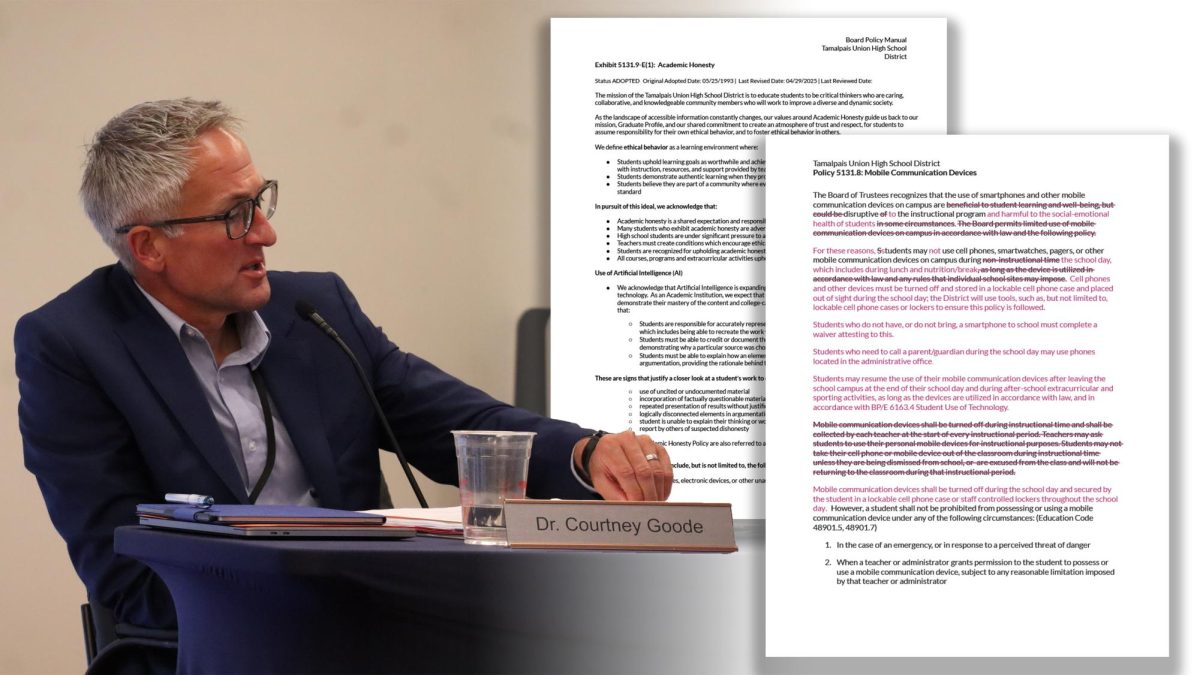
![Assistant Superintendent of Business and Operations Corbett Elsen presented an updated budget proposal for the 2026-27 fiscal year to the Tamalpais Union High School District (TUHSD) board of trustees on Tuesday, June 16.
Elsen presented an in-depth analysis of the district’s revenues, expenditures, future outlooks and the global and economic uncertainties affecting the district's revenue due to inflation and the war in Iran.
Because TUHSD is a basic-aid district, Elsen explained the significance of the housing market, stressing the gravity of the district’s financial situation as a result of lower demand.
“This is the bread and butter of our revenue: property tax revenues, [projected] to bring in over $93 million,” Elsen said, adding, “But ... we have decreased our revenue growth rate [projections].”
Elsen will return to the board of trustees on June 23, where the board will take formal action to adopt the proposed budget. To learn more about the updated budget proposal from the meeting, visit the June 16 TUHSD Gamut Online agenda.](https://redwoodbark.org/wp-content/uploads/2026/06/snapshot-1200x675.png)