
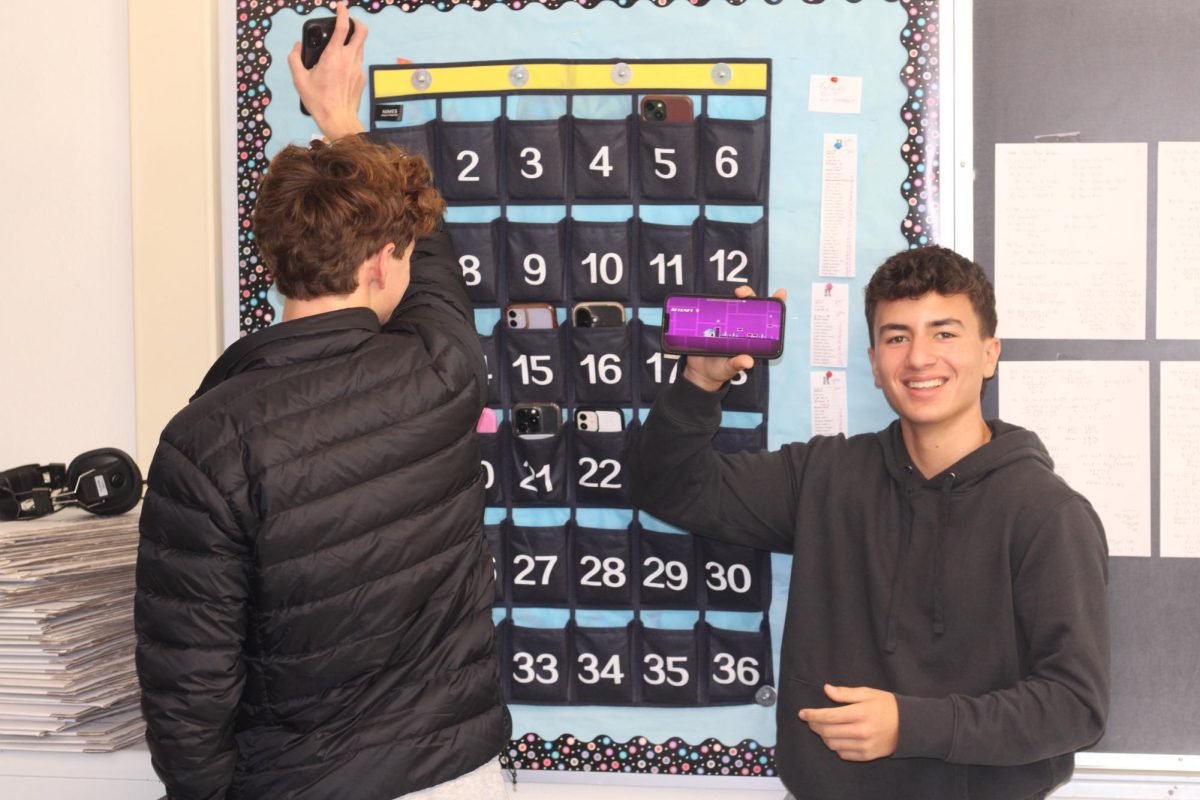
On Dec. 12, 2023, the Tamalpais Union High School District (TUHSD) implemented a ban on students using their phones during class time, requiring the installation of phone caddies, which are pockets for students’ phones on the wall in every classroom. The caddies were designed for students to put their phones away during class, to eliminate the distraction they posed. However, despite these measures taken by the school district, phone usage still seems to hinder students’ focus and attention.
For the past two years, students have been finding loopholes in the TUHSD phone caddy policy since its implementation. Whether it be taking their phone from the caddy mid-class or putting a “burner phone” in their assigned caddy spot, students have found numerous ways to avoid giving up their cellphones.
A burner phone can be anything from an old phone no longer in use to a prepaid mobile phone that can be easily purchased through Amazon or other online sites. For many students, sneaking their phone into class by placing a burner phone in their assigned caddy spot is a last resort.
Many students around the school, including an anonymous junior who will be referred to as Ben have used the burner phone trick to try to sneak their phones into their pockets rather than in the caddies during instructional time.
“I’ve seen burner phones used in class before. I even tried [placing a burner phone in the phone caddy] once in my AP World History class, but it felt [too risky], so I stopped. Some students still use them, but for me it wasn’t worth it,” Ben said.
In most cases, having one’s phone is an advantage in doing well on a test, but it’s not a permanent solution for a bad grade. Sophomore Enzo Doffo lent insight into the motive behind sneaking phones into tests.

“For some students, the effort of getting around the caddies feels worth it because they think [having their phone] helps their test scores. That’s why people always [sneak their phones into tests],” Doffo said. “I know a lot of students who use burner phones. There was someone in one of my classes who tried using [a burner phone] during a test, and they still didn’t do well. Kids [find ways around] the phone caddies all the time.”
Although many students try to cheat on tests using their phones, other students who aren’t participating in this shortcut are frustrated by it.
“I think [burner phone usage is] becoming a problem that the school should address. Some students basically brag about getting higher scores even though they’re cheating. It feels unfair, and it shows that the current system isn’t being [enforced],” Doffo said.
Ben also shared similar frustrations surrounding the effectiveness of the phone caddy.
“There’s really no point in phone caddies if people can just say they don’t have their phone or use a burner. There are [too many workarounds],” Ben said.
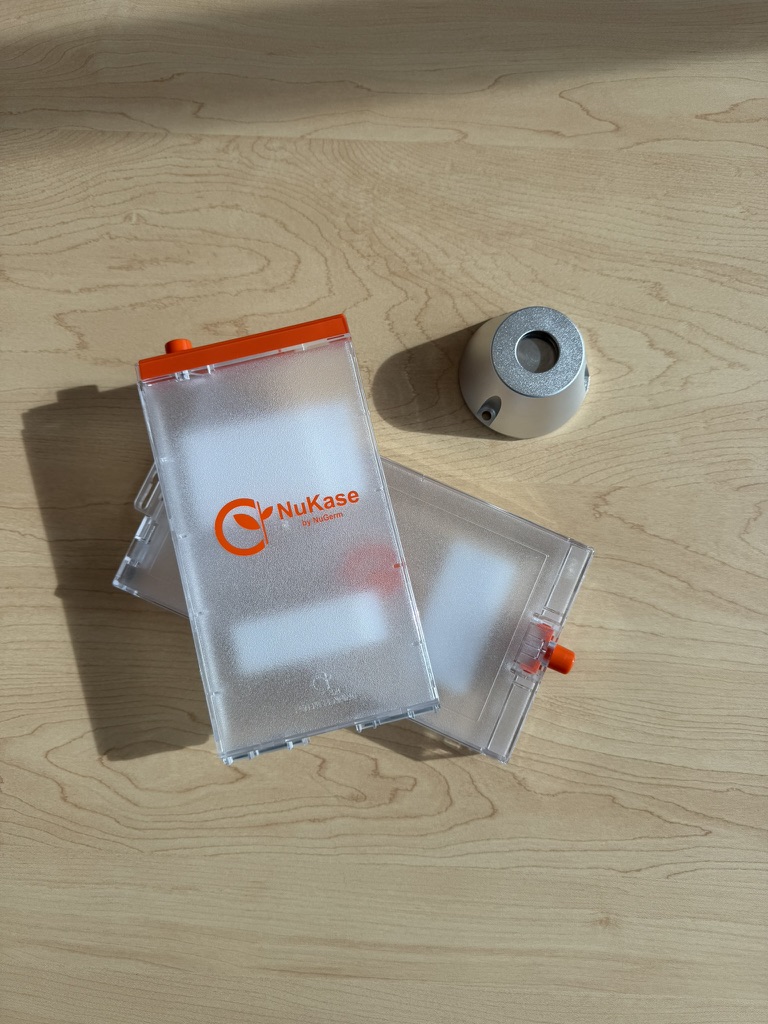
To combat these ongoing frustrations and workarounds occurring throughout the student body, the TUHSD Board of Representatives explored the option of Yondr pouches over the past two years, which are magnetic locking sleeves where students would put their phone in at the start of school.
On Nov. 19, 2024, the board approved to postpone their vote on the Yondr pouches, the delay caused by months of discussions among board members and community members alike, who expressed concern on both safety and the logistical cost of the pouches’ implementation.
The delayed idea of Yondr pouches led to another year with the phone caddies, serving as a final test that would help influence the board’s decision on phone policies in future years.
The board’s conversations on the pouches reopened on Oct. 28, 2025, where they met in the Redwood library. During the meeting, TUHSD Board President Cynthia Roenisch spoke out.
“In my opinion, we’re committing educational malpractice by not having [a stricter phone policy],” Roenisch said.
Although many students agree that the phone caddies are ineffective, math teacher Julie Norwood sees the caddies’ value as a learning tool that helps students focus.

“I had a lot more cheating incidents before the phone caddies. Kids were supposed to keep their phones in their backpacks, but they’d keep them in their pockets instead. I haven’t caught anyone cheating with a phone since the caddies were introduced,” Norwood said. “I firmly believe every student should have their phone in the caddy every period. I don’t have flexibility around that. If a student needs a reminder to tuck their phone away, that’s fine. I check the caddy daily, and almost every kid uses it.”
Norwood and other teachers around the school don’t feel it’s their responsibility to police the phone policy outside their own classes. Instead, they desire to be able to trust students to make the right choices.
“I don’t go out into the hallway to tell kids to get off their phones. I pick my battles,” Norwood said.
Although many students use their phones during class time, despite it being outlawed, students like sophomore John Steinhart also understand the phone caddy’s value in keeping students engaged and removed from distractions.
“The phone caddies are a good reminder for me to put my phone up at the beginning of class,” Steinhart said.
Many students, along with Steinhart, agree that phones can be used both unethically and as an academic tool.
“I use my phone in an academic way in Architecture all the time. I often use my phone to take pictures of my models and drawings to submit them,” Steinhart said.
Some teachers also share this view, with Norwood being one of them.
“In my Academic Workshop class, kids use their phones to upload homework or do legitimate schoolwork. Phones can be productive in that setting,” Norwood said.
Although both students and teachers are divided on the effectiveness of the phone caddies, students will find workarounds, and teachers will always be on the lookout for empty phone pockets. In this struggle to improve student engagement, TUHSD continues to seek a better solution to keep students off their phones.