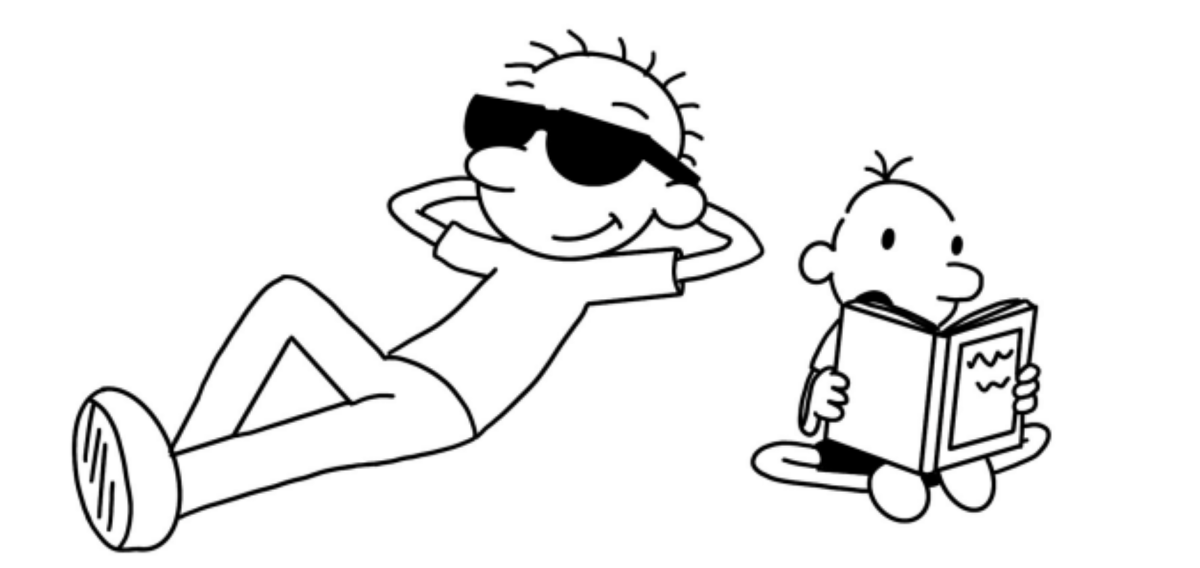
Searches for “how to be nonchalant” have spiked 241 percent in May of this year on Google, per Movchan Agency. ‘Nonchalant’ is commonly characterized as having a deliberate lack of interest, enthusiasm or concern. Let’s be honest: Pretending not to care has become the worst trend in high school. We are apathetic in how we respond to the people we care about, downplay the friendships we rely on and hide our real reactions out of the fear of looking “too invested.” Being nonchalant might look mysterious from the outside, but inside it leaves us isolated, misunderstood and emotionally drained. At some point, we have to ask ourselves, why are we working so hard to act like we don’t care, when caring is what makes our relationships and lives meaningful in the first place? A National Library of Medicine study found that “emotion suppression may be linked to poor health outcomes through elevated stress-related physiology.” Not wanting to look like we “care too much,” or in other words, being nonchalant, has become an extreme.
A study from the National Institute of Health focused on adolescents suppressing emotions, and found that “suppression is often cited as a maladaptive regulatory strategy due to its associations with poor psychosocial functioning when it is used excessively.” A maladaptive regulatory strategy is a coping mechanism that gives short-term relief but results in counterproductive long-term consequences, such as emotional distress and psychological problems. For example, instead of getting hyped for spirit days, actively participating in class or showing any enthusiasm outside of what is considered the “norm,” students are defaulting to the safety of being nonchalant. According to the October Bark survey, 74 percent of students wished that more people dressed up on spirit days, indicating that there is enthusiasm for more involvement in collective school tradition, yet that isn’t the reality when spirit days actually happen. Redwood sports teams are also performing at the highest level of the schools in the Tamalpais Union High School District, but somehow, we seem to have the least amount of school spirit and support for one another. Why is being supportive of people in our community a fear at our school but encouraged at others?
We’ve convinced ourselves that showing emotion makes us weak, dramatic or “too much,” so we swallow it instead—that feeling of excitement when we like someone, the hurt when a friend pulls away, the embarrassment when something actually matters to us. But suppressing all of our emotions doesn’t make us stronger; it works against us. With more reliance on social media and technology to remain connected after the COVID-19 pandemic, Gen Z has only continued to hide behind their screens. In a study published by the National Institute of Medicine, 20 percent of the tested individuals in the pre-pandemic had a screen time of six or more hours a day. During the pandemic, that percentage of students jumped up to 40 percent. When hours online stack up, so do the habits that come with it, especially the habit of emotional detachment, a practiced nonchalance that starts online and quietly seeps into real life.
Dr. Caroline Fenkel, Chief Clinical Officer at Charlie Health, told SheKnows, a lifestyle blog, that “Nonchalance can act as a protective mechanism, but it can also become a barrier to meaningful connection and emotional honesty.” With the intent of being “nonchalant,” people are disconnecting from their peers. One of the most monumental high school events, Homecoming, is often seen as lame or “uncool” for upperclassmen, especially for those at Redwood. However, a survey from YouGov found that 54 percent of Americans wish they could go back to high school. That nostalgic feeling exists for a reason: These four years are meant to be a time for teenagers to explore their unique interests, take risks and build their own sense of identity. But today’s teens are held back by the fear of the labels they will receive and the pressure to appear apathetic and unconcerned.
Some might argue that being nonchalant isn’t harmful at all, that it’s simply a way for teenagers to protect themselves in a social environment where judgment can be harsh. From this perspective, staying calm, detached or “unbothered” can seem like a smart defense mechanism. After all, high school can be unforgiving, and displaying strong emotions might expose you to embarrassment or rejection. Luna, a health and wellness app for teenagers, states, “When teens start to see themselves only through these roles – the cool one, the emotional one, the chill one – it can make it harder to explore anything outside of that.” And sticking to those labels might feel safe, but it also keeps us from being honest about what we actually think and feel.
While staying calm under pressure is a valuable skill, pretending not to care about anything is not the same as emotional maturity. Nonchalance may feel like protection in the moment, but in the long run, it walls us from the relationships and opportunities that make life meaningful. The truth is, people aren’t drawn to those who feel nothing; they’re drawn to those who feel deeply and honestly. When we permit ourselves to show excitement, disappointment, affection or fear, we’re not being dramatic—just human. Try out for that sports team. Dress up for spirit days. Join the skit. Raise your hand in class. Stop putting in effort to appear effortless.