Semiannually, Club Day transforms the South Lawn into a maze of tables covered in posters, flyers and bins of candy. The Associated Student Body organizes Club Day as an opportunity for school clubs to increase membership by advertising to students who wish to explore their interests beyond the classroom. Club leaders call out to passing students, inciting them to sign up for clubs, ranging from the Poetry Club to the Investment Banking Club. In just two lunch periods, hundreds of student names fill club sign-up sheets — though only a small percentage of those sign-ups lead to real participation.
According to a November 2025 Bark survey, 45 percent of students this year signed up for a club they do not attend regularly, while only 13 percent of students
are active participants in clubs they signed up for on Club Day. For some students, joining clubs is about forming a connection or pursuing a passion. For others, it’s about the free food offered with a sign-up or adding activities to college applications.
For freshman Carter Smith, the appeal of Club Day is not all about finding something that piques genuine interest. While that may have been his initial intent, the temptation of a candy reward for signing up kept him pen-in-hand on Club Day.
“People would join clubs for the candy and not go [to meetings], and [the leaders] may have gotten incorrect numbers,” Smith said. “I’ve [also] signed up for clubs knowing I wouldn’t go to [simply] because I wanted the treat.”
The open sign-up system allows students to join a club without any actual commitment, resulting in students enrolling with no intent to attend meetings and not receiving any consequences.
“I decided [which clubs] to go to [after Club Day] based on what was the most interesting to me and [which would] further my future,” Smith said.
After observing the enticement of food in club settings, junior and Jewish Student Union (JSU) Club President Maayan Bujanover started bringing snacks to each club meeting in an effort to maintain a sense of community.
“A lot of clubs advertised with food, [whereas] we offered the notion of a solid community where everyone has their own place and an opportunity to speak,” Bujanover said.
In Bujanover’s club, having food seems to have increased the number of returning participants. But snacks aren’t just a bribe; they’re a part of each meeting to foster culture and connection between members.
“[Food] can positively impact attendance, but after a while, I think people learn to love the club for the atmosphere and not just for the food,” Bujanover said.
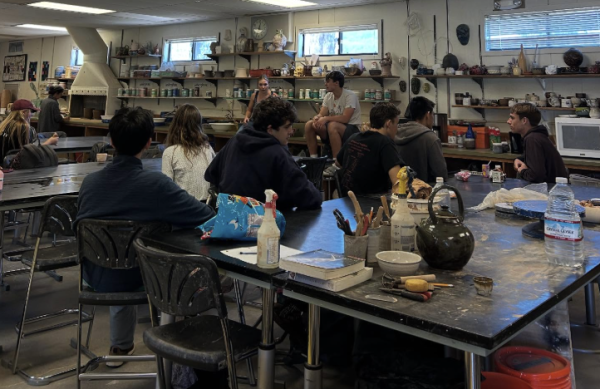
However, other clubs don’t use food as an incentive for members to stay active. Giants’ Studio, a club run by juniors Avery Gunst and Izzy Marsh, focuses on hands-on creativity, giving students space to unwind and explore the world of ceramics.

“Our club members who show up are active and ready participants whose dedication and passion [are] evident through their artwork,” Gunst said.
This contrast highlights how true engagement is reflected in the product a student makes rather than the amount of people in a club.Whether or not a club offers a sweet treat as a reward, one thing is promised: participation points. Clubs, like most other extracurriculars, can serve as activity checklists for students’ college applications. Real impact, however, comes from making a difference in the community. By joining, attending or starting a club, students can demonstrate community engagement in their résumé.
Be it a candy bar, a college application goal or a real interest, being part of clubs continues to shape student life in unique ways.
“You have to learn to accept that some people will [just come for the food]. Try to push them to participate and keep coming back, not just for the food, but for the community,” Bunjanover said.
In the end, motivation may vary, but the opportunities to connect — and maybe grab a snack along the way — remain a hallmark of the high school experience.