On Oct. 8, 2025, Bill AB 1264, directing agencies to ban ultra-processed foods (UPFs) from meals served in California public schools, was signed into law by Governor Gavin Newsom; the first of its kind in the United States.
Bill AB 1264 states that by July 1, 2029, public schools must start dismissing UPFs from their provided options. Then, by July 1, 2035, UPFs that are categorized by the California Department of Public Health (CDPH) and California Office of Environmental Health Hazard Assessment (OEHHA) must be extinct from California public schools.
AB 1264 is also known as the “Real Food, Healthy Kids” Act, and it applies to California public schools grades K-12. This bill only targets the food and drinks sold on campuses during the school day.
According to Bill AB 1264, UPFs are foods high in unhealthy ingredients, meaning they contain industrial ingredients. This includes meals with high levels of saturated fat, sugar or sodium, and ones that contain artificial colors, flavors, stabilizers or preservatives.
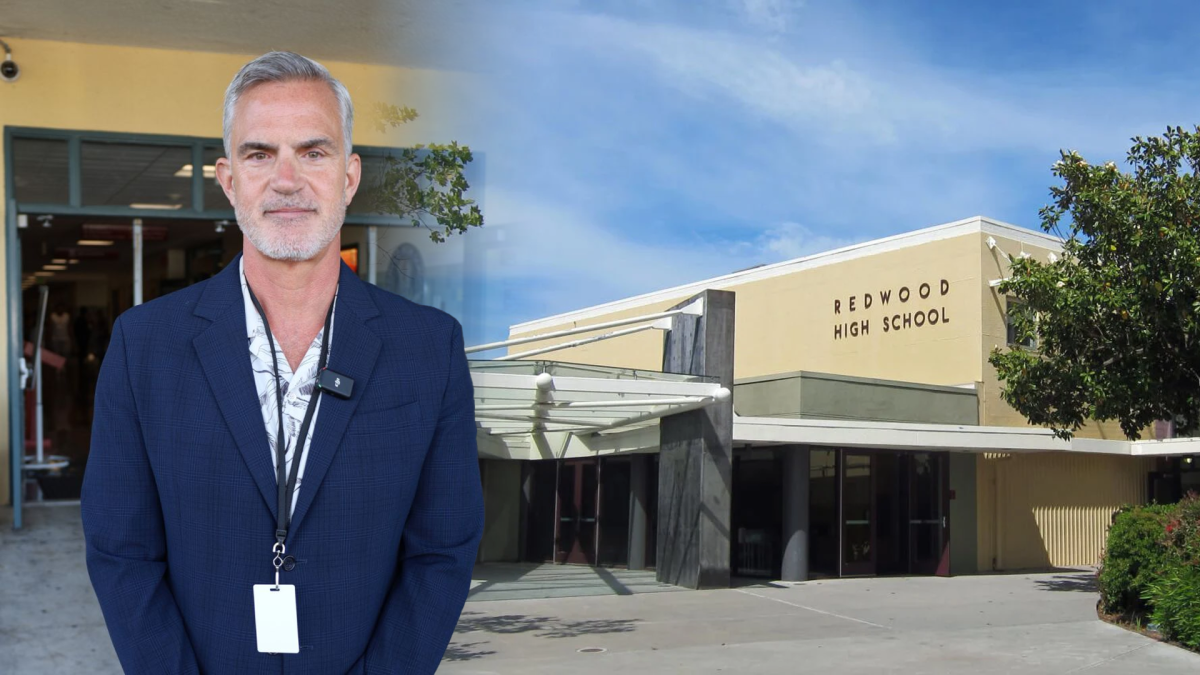
Ben Guyton, Director of Student Nutrition Services for the Tamalpais Union High School District, imagines Bill AB 1264 affecting all of the meal programs offered, including breakfast and lunch, as well as vending machine snacks. Guyton attended a Webinar hosted by the Berkeley Food Institute and University of California San Francisco on October 27, educating him on UPFs and Bill AB 1264.
“About 62 percent of what students [aged around 16] eat are ultra processed foods,” Guyton said.
The bill will direct the CDPH and OEHHA to identify a subcategory of harmful foods to be phased out. The identification of harmful foods can be connected to the presence of additives or the links they have to health problems.
Currently, Redwood serves foods like Cinnamon Toast Crunch and Trix cereals at school for breakfast in the cafeteria. These foods could be taken away from the menu once the bill gets fully implemented.
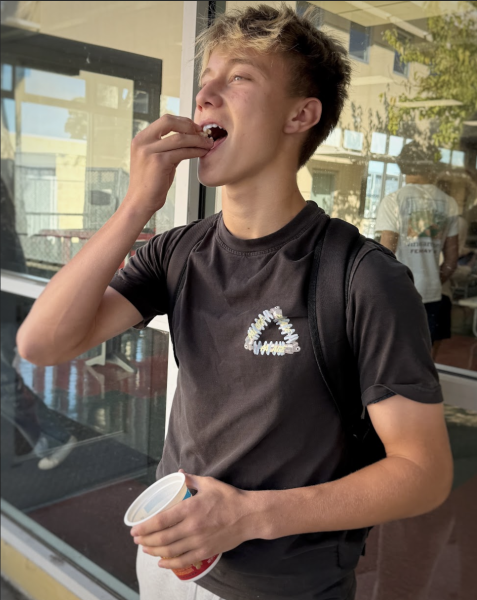
Freshman Tristan Turner gets cafeteria food four to five times a week and looks forward to the school breakfast every morning.
“The ultra processed foods are the only ones that people actually eat, so I feel if they took them away, no one would get cafeteria food,” Turner said.
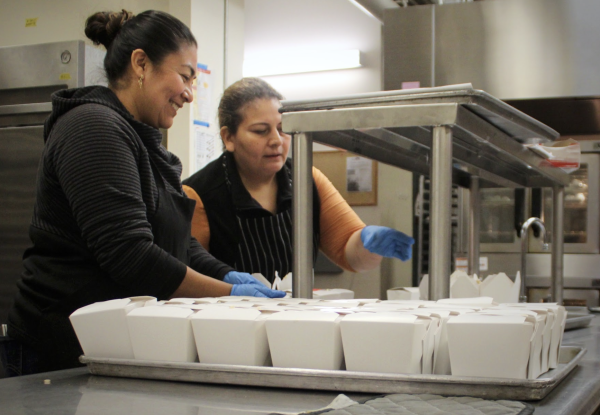
According to Guyton, breakfast is likely to be affected more than lunch. The cereals served at breakfast create a wide margin of UPFs when comparing the two meals. Guyton is excited for these new health standards to be put in place.
“We use more prepackaged items at breakfast than we do at lunch,” Guyton said. “The fact California is going to set these standards and require manufactures to report to the state what we are selling schools [and] what they contain, I think is going to give [faculty] and students a lot of data.”
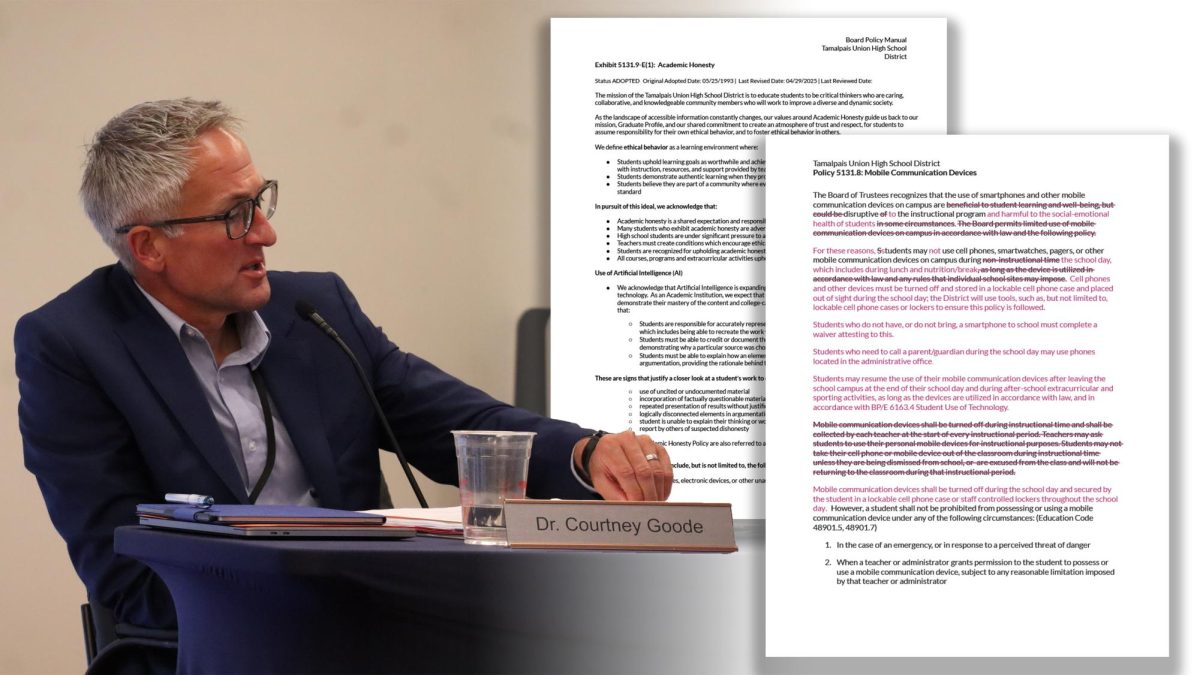
![Assistant Superintendent of Business and Operations Corbett Elsen presented an updated budget proposal for the 2026-27 fiscal year to the Tamalpais Union High School District (TUHSD) board of trustees on Tuesday, June 16.
Elsen presented an in-depth analysis of the district’s revenues, expenditures, future outlooks and the global and economic uncertainties affecting the district's revenue due to inflation and the war in Iran.
Because TUHSD is a basic-aid district, Elsen explained the significance of the housing market, stressing the gravity of the district’s financial situation as a result of lower demand.
“This is the bread and butter of our revenue: property tax revenues, [projected] to bring in over $93 million,” Elsen said, adding, “But ... we have decreased our revenue growth rate [projections].”
Elsen will return to the board of trustees on June 23, where the board will take formal action to adopt the proposed budget. To learn more about the updated budget proposal from the meeting, visit the June 16 TUHSD Gamut Online agenda.](https://redwoodbark.org/wp-content/uploads/2026/06/snapshot-1200x675.png)