
The end of a social event doesn’t always mean the end of a night. For many teens, the farewell that closes out a hangout or gathering can mean the beginning of an exhausting mental cycle of overthinking. Thoughts like, “Did I really say that last night?” or “Did I embarrass myself in front of everyone?” start to spiral. This self-doubt has a name: Post-event processing (PEP).
PEP is the act of replaying social moments after the fact, fixating on mistakes, embarrassing moments and how others perceive you within social situations such as parties, hangouts and events. Rather than a meaningful reflection on social interactions, PEP reinforces negative moments by filtering out positives, leading to a cyclical loop of self-criticism.

The science
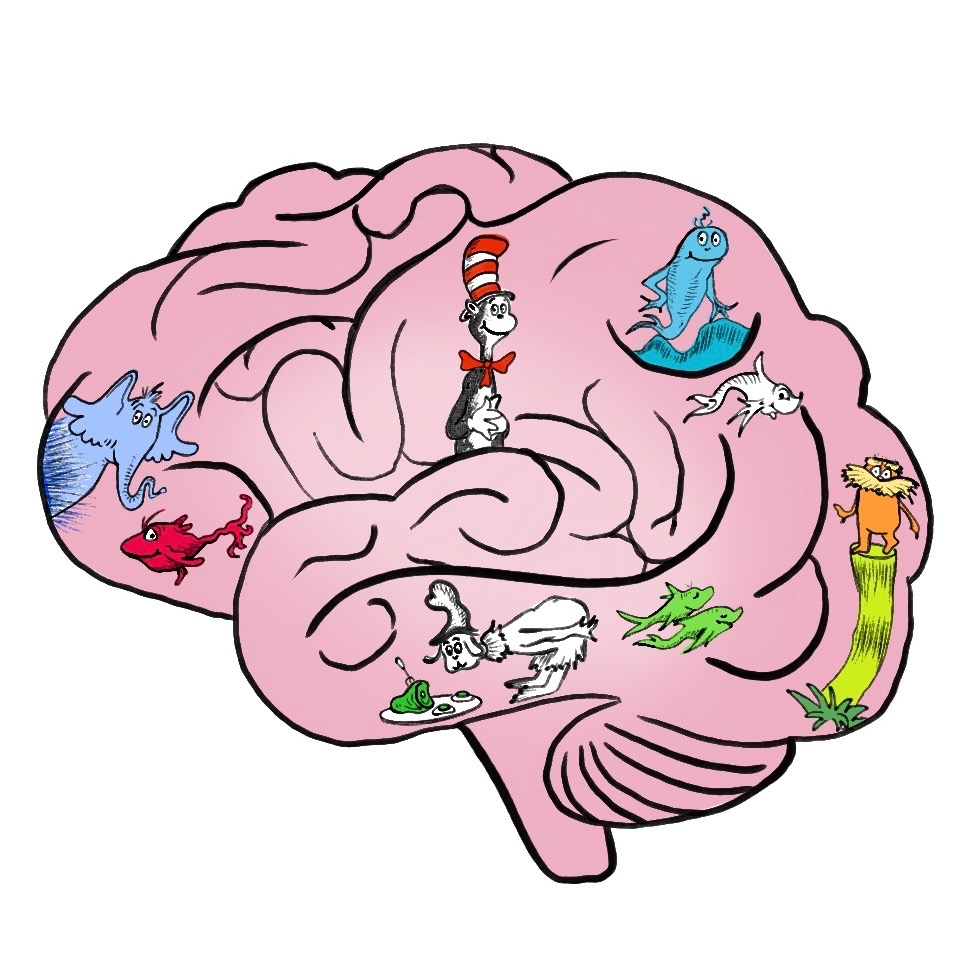
As explained by local teenage and family-based therapist Arin Bass, there are two main parts of the brain active during PEP: the amygdala and the prefrontal cortex. The amygdala, located deep in the brain, is responsible for regulating high-level emotions, including fear, anger and pleasure. When it senses a potential threat, such as an embarrassing social memory, it triggers the fight or flight response.
“The fight-or-flight response is linked to the caveman days when people relied on this response to fight or run away from [something] like a tiger. Fast forward to today, and that fight-or-flight response really hasn’t changed, but the threats have changed. We’re not being chased by tigers today. We’re experiencing what we think could be a negative or threatening event, but the part of our brain responsible for this hasn’t actually adapted,” Bass said.
Meanwhile, the prefrontal cortex, located in the front of the brain, regulates social interaction and working memory. However, for teenagers, the prefrontal cortex is far from fully developed.
“The prefrontal cortex is still developing in teens, and it won’t be fully mature until around age 25. So if you’re 15, you have another 10 years to go before your prefrontal cortex is fully developed. It’s age-appropriate; it’s not supposed to be fully developed until 25, but I think that’s why teens can get stuck in this ruminative thinking process,” Bass said.
The immature prefrontal cortex also affects memories. The part of the brain can store the negative experience and use this memory to predict future events, impacting an individual’s willingness to attend social events in the future.
“If somebody’s expecting they’re gonna have a negative experience at the party, then they’re only going to remember and interpret the event negatively. Even if something really great and positive happened,” Bass said. “Humans are wired to pick up on the negative. It’s a survival mechanism.”
Anxiety and perfectionism
PEP is especially common in teens living in competitive areas such as Marin County. According to an October Bark Survey, 65 percent of Redwood students reported overthinking after social events.
“We live in an area of the country that is a huge metropolitan area, and there’s a huge population of highly competitive teenagers. Teens in this area probably have higher rates of anxiety than perhaps other areas of the country,” Bass said.
But certain personal qualities can exacerbate these feelings of rumination as well. One study at the Institute of Clinical Psychology and Psychotherapy found that 86 percent to 96 percent of participants with social phobia or a major depressive disorder engaged in post-event processing after an embarrassing social situation.
“PEP can typically arise from a previous anxiety, social anxiety, underlying anxiety symptoms, or disorders,” Bass said. “Take two teenagers, same age, different genetics, different family experiences, different family systems currently, different friend groups or different definitions of success. One has social anxiety, one has low social anxiety. They’re going to the same party, same experience, but they’re going to interpret those experiences really differently.”
These differences in interpretations don’t only stem from personal experiences. Other factors, such as self-esteem, can play a major role in this cycle as well.
“A lot of people struggle with negative core beliefs or really negative critical self-talk. So that’s all kind of the breeding ground for this ruminative, over-analyzing, over-thinking experience of breaking down an experience in a social setting that can really be disruptive to somebody’s life,” Bass said.
Alcohol’s role
According to research conducted at the Alcohol Research Center at the Medical University of South Carolina, 20 percent of participants who struggle with social anxiety have alcohol dependence. But a buzz won’t prevent PEP. In fact, alcohol lowers inhibitions, causing users to make social choices that they may not make while sober. Senior Gigi Walravens has observed this behavior unravel in those around her during social events she’s attended.
“When drinking [alcohol is] involved, you’re just a different person. Your emotions and the way that you react to things just aren’t as real,” Walravens said.
There is also a science behind it: When alcohol is consumed, the calming neurotransmitter Gamma-Aminobutyric Acid (GABA) is released, causing individuals to feel more relaxed. As the brain releases more GABA, it compensates by reducing these receptors and increasing excitatory neurotransmitters, which control muscle movement, memory, learning and motivation. As the alcohol wears off, the imbalance creates a state of anxiety and intensifies PEP.
“After a night of drinking alcohol, people experience that depressive effect of alcohol and are most likely going to be interpreting those experiences pretty negatively,” Bass said.
Alcohol also disrupts hippocampus activity, which is responsible for storing memory, and interferes with converting short-term memory into long-term memory.
“When you wake up the morning after and you realize what you could have said or you forget what you said to people, and you don’t know if it was nice or not, you’re scared people are mad at you or you’re scared that you did something embarrassing,” Walravens said.

The social media factor
PEP has worsened in modern generations, as actions can live indefinitely through social media. Life Lab teacher Nicolle Plescia has noticed this increase in anxiety in her own students and children.
“I’m teaching the movie ‘The Social Dilemma’ right now. Studies show that teenagers are less willing to take risks now than they were 20 years ago. Who wants to do something that could potentially be made fun of or turn up in some terribly mean gossip Instagram account where people say mean things about them?” Plescia said.
Social media can also trigger these thoughts when they may not have been present before.
“You’ll look at a photo and be like, ‘Why does my hair look that way?’ or ‘Why does my stomach look like that?’ And then you rethink everything, like ‘Was I talking to people with my hair looking like that?’” Walravens said.
Coping
“If a teen can use tools to interrupt this negative feedback loop of PEP and social anxiety, they can break the cycle,” Bass said.
The first step to breaking this cycle is realizing that PEP is a common experience amongst teens, which can be difficult due to the isolation that teenagers put themselves through when experiencing PEP. The second step is showing oneself compassion during times of suffering.
“There are a few components of self-compassion. One is acknowledging the pain you’re having. Turning towards the upset as opposed to avoiding it and pushing it away,” Bass said.
Whether it’s a small hangout or a large party, teenagers can be very hard on themselves and get stuck in this cycle of overthinking. Understanding what PEP is, and that it is common, can make those morning-after thoughts feel less isolating and more human.
“Reminding oneself that I am not alone. Other people are going through this. Suffering is part of being human,” Bass said.