
Standards for nutrition are constantly changing at the government level. Whether it’s the new food pyramid published by the U.S. Department of Agriculture (USDA) on Jan. 7, or Assembly Bill 1264, a California bill banning ultra-processed foods in K-12 schools, changes take a long time to reach students. This leads to confusion about nutrition and differing standards.
Federally, the rules for providing school lunches are extremely detailed.
According to Ben Guyton, director of student nutrition services for Tamalpais Union High School District (TUHSD), “Not only does it tell us it can only have so much fat, so much sugar, so much sodium, but also gives us a pretty narrow range of calories… It’s about 800 calories per lunch.”
But outside of calorie count, standards are constantly changing. The narrative surrounding the new dietary guidelines announced in January focuses on diverging from the actions of the Biden administration.
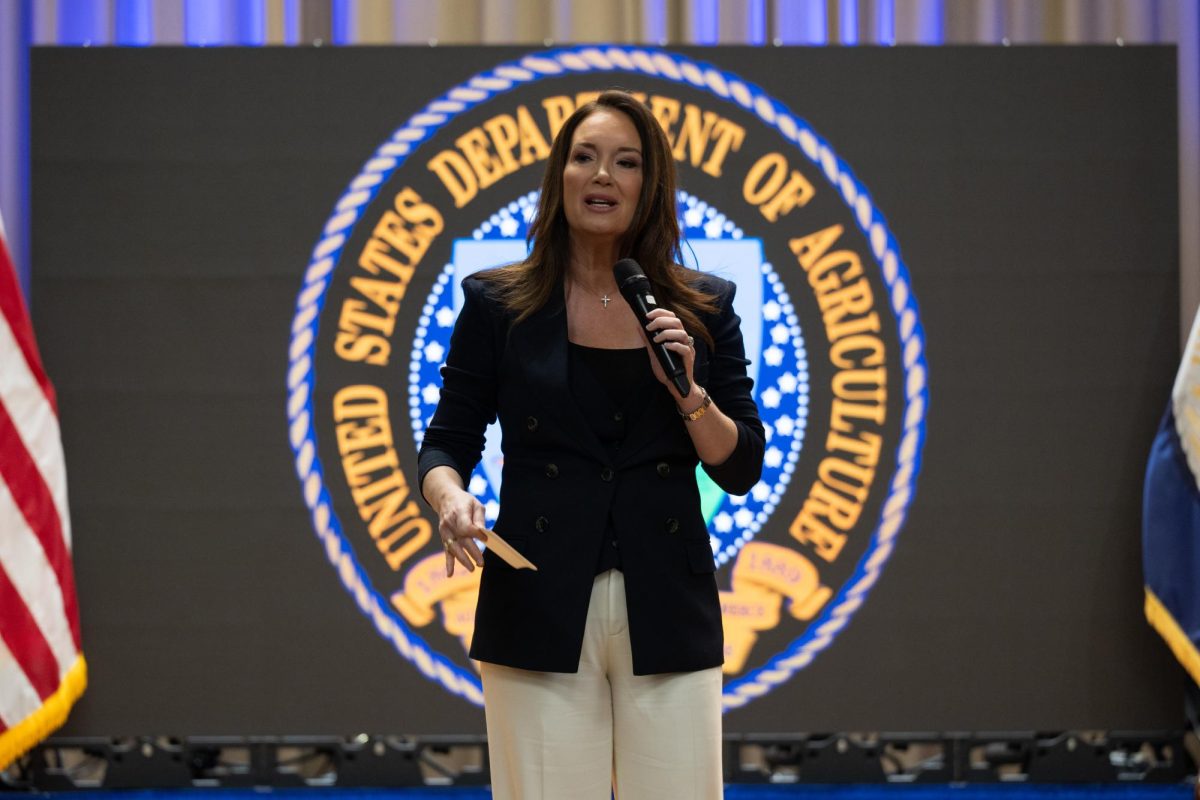
“We will make certain the 2025-2030 Guidelines are based on sound science, not political science. Gone are the days where leftist ideologies guide public policy,” said Agriculture Secretary Brooke Rollins, while announcing the guidelines.
In those same announcements, Robert Francis Kennedy Jr., the current U.S. Secretary of Health and Human Services, said, “The dietary guidelines that President Biden gave us…it’s just an industry-generated document. The same industry impulse that put Froot Loops at the top of the food pyramid.”
Guyton said, “The changes to the dietary guide for Americans, which the food pyramid is part of, have not trickled through yet. USDA is working on those rules right now, and they have said they’re going to fast track these changes. It is possible that they shake things up a lot.”
However, he doesn’t expect major changes to happen. The implementation of new guidelines, especially ones that emphasize protein, will require money that the district doesn’t have.
“If [the federal government] were to go in the ‘you must’ direction, if it doesn’t come with additional funding, which I think would be really hard to get Congress to commit to, there would be a lot of schools that are gonna have a really hard time meeting the new rules. And we would be included,” Guyton said.
Kay Frenzel, director of nutrition at the California Department of Education, expanded on how school meals are currently funded.
“With California Universal Meals, the state of California is providing additional per meal reimbursement to ensure that every student gets access to a breakfast and a lunch at no cost to them,” Frenzel said. “The per meal reimbursement, which is $5 and something right now…Think about where you can and cannot go and what you can and cannot eat, right? For $5.”
“We get about 80% of what it costs to make the meals from federal and state reimbursements. That gap in the past several years has come largely from grants, and those grants are going away,” Guyton said.
What does that mean for the Redwood cafeteria?
“Every kitchen is going to be greatly reduced in number of hours for staff working there. Because of that, next year, what we do is going to be harder,” Guyton said.
He added that this funding model also creates a barrier to providing healthy food.
“We need to make sure that we’re saving as much money as possible on food, so that we can still give enough food to the kids and pay our folks who work in the kitchens a living wage…We don’t do local, we rarely do organic, we don’t do compostable utensils and things like that. It’s because of the reality of our funding model.”
Nutritional guidelines also manifest in the nutrition curriculum required by the California Department of Education.
“Each school district looks at what the California Education Code says around those health standards and nutrition, and then they develop their curriculum,” Frenzel said.
However, that isn’t necessarily a straightforward task, and PE teacher Nicole Graydon said that federal and state guidelines don’t often influence the nutrition curriculum she teaches.
“The curriculum for nutrition for physical education is district mandated and district designed. So if they decide to take a look at it again, hopefully they would look at new standards.”
As of today, the nutrition curriculum has not been updated to reflect new standards.
Frenzel adds that implementation would require more guidance saying, “USDA has been pretty clear that with this go around, it will be a pretty fast turnaround time. They are anticipating that they will get their proposed regulations for the meal standards out, and they expect that it will be implemented for the upcoming school year. But until we see guidance, it’s really hard to comment.”
Outdated curriculum combined with mixed messages from the state make it difficult for students to find accurate nutrition information.
“At the school I used to work at when I taught health, the nutrition curriculum was very much the government MyPlate site…It was really focused on the micro and macro nutrients and things like that,” Graydon said. “Also, I think for some reason around that point it was very cut and dry.”
This isn’t the case anymore. Messaging from the government is changing, and students are turning to alternative sources of information such as social media.
“When we talk about nutrition in class, one of the biggest things that we’re dealing with when you have a conversation is students are getting information from things like social media and influencers,” Graydon said. “It’s really hard for students to navigate that, especially when the district mandated curriculum isn’t as clear as it could be on all of that or is up to date with new standards.”
Redwood Health Specialist, Mary Chapman advises students that, “The media can be skewed in so many ways.” She says the best place to get trustworthy nutrition information is directly from your doctors.