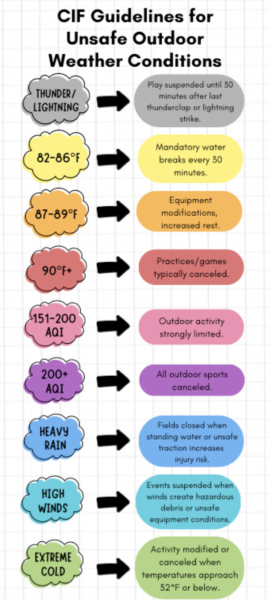
Unpredictable and extreme weather conditions are increasingly affecting outdoor sports, leading to concerns with the spring sports season looming ahead. From heavy rain to strong winds and low temperatures, shifting weather conditions have disrupted outdoor sports and created challenges for both athletes and coaches.
The number of practices canceled and races postponed has increased year by year, with sports such as softball and track being particularly vulnerable to these changing conditions. Canceled competitions and shortened practices can limit preparation time, impact team momentum and create scheduling conflicts for teams trying to reschedule events within an already short season.
Junior softball player Aria Sreba said that it was rare for sessions to get postponed her freshman year, whereas this year, multiple practices and a game have already been postponed.
“We’ve had several practices canceled due to the rain,” Sreba said. “Field conditions-wise, it’s not good to practice on. Especially with the muddy fields, as they can get flooded.”
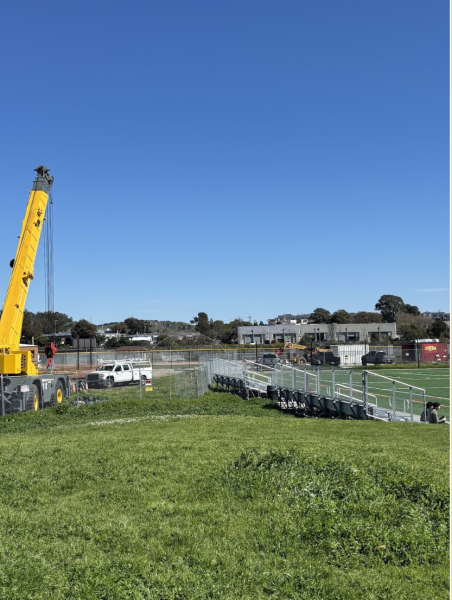
Due to construction this year, softball only has one field between varsity and junior varsity (JV), which makes scheduling practices especially difficult.
“We only have one field this season, and it’s definitely hard for both varsity and JV softball,” Sreba said. “Both teams get impacted by [the weather].”
The softball field is located next to the Corte Madera Creek, which experiences significant water overflow during heavy rain and flooding, meaning the field has a limited time frame for use.
“From the beginning of the season, even during tryouts, we were getting rained out. We’d have to practice in the gym, which consists mostly of hitting.” Sreba said. “While it can be beneficial, it’s not the best for practices overall, because you want to be out on the field to get your practice in.”
The concerning part is that the cancellation of sporting events is increasing exponentially, Sreba said, largely due to both the rain and high tides that happened both in January and February.
“I couldn’t remember any games being rained out my freshman year or even sophomore year. I don’t remember games getting rained out, but I’m definitely seeing it
more this year,” Sreba said. “[We had] our first game of the season and we had to push it back [because of the rain].”
Junior Devon Stoll-Morrill competes in pole vault and high jump as part of the track and field team and finds that while the weather is noticeable, it doesn’t affect the track season all that much.
“We’ve only had a single practice canceled due to the storms that occurred over winter break,” Stoll-Morrill said.
She also added that in her three years on the team, they’ve rarely had practices or meets canceled due to weather.
However, Stoll-Morrill notices the added challenges extreme weather presents to athletes.
“Rain and wind can make it more difficult to do sports because they can both get in your way. If it’s raining, it can make it difficult to see or coordinate if you’re approaching [your jump]. And if you’re going up in the air and it’s windy, you can get blown off course,” Stoll-Morrill said. “Especially with pole vaulting, [since] you go a lot higher up, the wind can affect you more.”
As the spring season continues, teams will continue to adjust their schedules due to the changing weather conditions. For many outdoor sports, weather has become an additional factor shaping practices, competitions and preparation.