New York Times Games have become a go-to pastime for students. Produced and edited by Joel Fagliano and his team, these games consistently show up on screens throughout school, offering students quick puzzles, connection with peers and breaks from assignments.
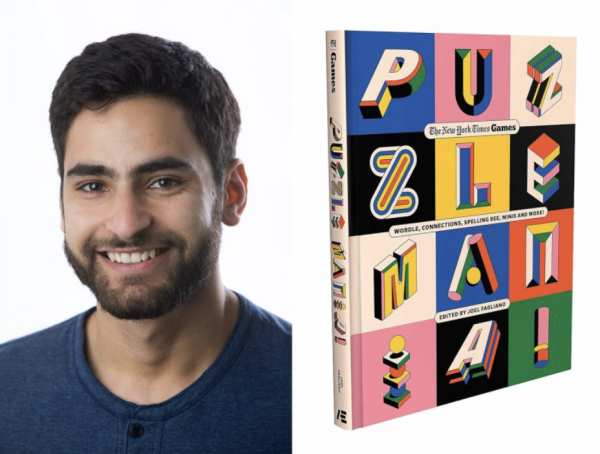
Fagliano is the lead editor for New York Times Games, created the Mini Crossword in 2014, and edited the book Puzzle Mania!, which made an appearance on Barnes and Noble’s list of The Best Gift Books of 2025. At a Book Passage event in Larkspur, he spoke about the process behind making puzzles and expressed excitement hearing students play his games. As a high schooler, Fagliano had a strong interest in creating and completing puzzles.
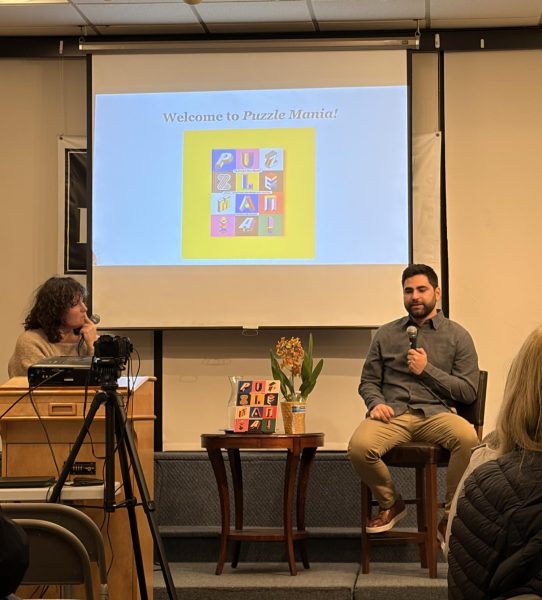
“It felt like puzzles were more nerdier and niche, and [now] they’ve become this mainstream thing that everybody’s into. [It’s] just amazing to see that high schoolers are doing it, [and] it encourages me for the future of the public,” Fagliano said.
Sophomore Sophie Poindexter often plays the Wordle, one of the many daily word puzzles offered by the New York Times website. She always sees her peers playing New York Times Games in school.
“There’s three reasons people play New York Times Games; others are blocked, it’s a boredom buster and it’s challenging and fun. It’s a brain stimulus,” Poindexter said.
According to Poindexter, most New York Times Games are more educational than other online games.
“Wordle gives a much better alternative to a game. It’s really addicting because it’s only one per day, so you want to keep coming back to it and get streaks,” Poindexter said.
While some students do the games during class time, they are typically done after work is completed as a way to pass the time.
Poindexter and other students often play games that Fagliano creates and edits. When working on games, Fagliano and his team strive to ensure the games are a good use of time for those playing, without it feeling like a test. For Poindexter, the thinking aspects of the games are why they provide educational benefits while also being enjoyable.
“Having a little moment each day to carve out for this moment of joy [and] success [is] what we’re trying to provide,” he said.
The games also offer bragging rights to Poindexter with her friends and family, another incentive to play them. Junior Vivienne Fitzgerald also plays the New York Times Games often, as they build problem solving and communication skills while deepening friendships.
“My dad sends me the Connections everyday, and me and my brother play ‘Pips’ together,” Fitzgerald said. Pips is an online domino game that challenges players to arrange their tiles to correctly meet conditions on the board, like by number or color.
“It’s juxtaposed to the education system that we primarily have where you’re working to solve
problems individually. Instead, it’s creating a way where you can work with people and learn with others to solve problems,” she said.
While editing puzzles is a niche creative career, Fitzgerald stated how Fagliano’s career can be inspiring for people, particularly Redwood students.
“There is a focus at Redwood in being academically strong, but his career shows that if you pursue creative endeavors you can still have a job in that and be successful,” Fitzgerald said.
Growing up, Fagliano’s father did New York Times puzzles each morning, which instilled his interest in them at a young age.
“Maybe it was the hubris of being a teenager, but I decided I’ll start to make crosswords of my own,” Fagliano said.
Additionally, while in college, Fagliano interned with Will Shortz, a famous puzzle expert and crossword editor, which he said felt surreal.
“He’s a living legend, and [being] a young kid, it can be intimidating to sit in his office, bandying about clues and brainstorming how to make the day’s themes,” Fagliano said.
From starting to play puzzles in his childhood, being the lead editor for the New York Times Games, and editing Puzzle Mania!, Fagliano felt that his career was coming full circle.
“It’s a surprise to people I grew up with. My dad did the crossword every morning, and now I work on the crossword,” Fagliano said.