

A planned trip to Havana, Cuba, for students at Tamalpais Academy of Integrated Humanities and New Media (AIM) program was canceled 48 hours before departure, leaving dozens of students disappointed after months of preparation.
About 85 students in the AIM program had planned to travel from Feb. 8 to Feb. 18 for a 10-day trip to Cuba, where they would create short films about students at a local art school in Havana.
Senior Noa Weis, an AIM student who planned to attend, said students had been preparing since October and had already paid about $4,000 to participate.
“It was going to be a once in a lifetime experience,” Weis said. “It would have been such a special experience to be able to go with this special group of people.”
Weis said she knew there was uncertainty surrounding the trip in the weeks before departure.
“There was a lot of discussion prior to the trip about the possible cancellations,” Weis said.
The cancellation came amid a growing fuel and infrastructure crisis in Cuba tied to disruptions in the island’s oil supply.
For decades, Cuba had relied heavily on imported oil, particularly from Venezuela, to power its electrical grid, transportation system and aviation fuel supply. In recent years, Venezuela has supplied roughly one-third of Cuba’s oil, making the island especially vulnerable to disruptions in shipments.
However, recent political conflict and U.S. policies targeting countries that export oil to Cuba have sharply reduced those shipments. As imports declined, the country began experiencing widespread fuel shortages, power outages and transportation disruptions.
The shortages have also affected aviation fuel. In early 2026, Cuban officials warned that the country temporarily lacked enough jet fuel for airplanes to refuel, forcing some airlines to cancel flights or refuel in other countries.
These conditions raised concerns for school officials organizing the AIM trip. If fuel shortages worsened, transportation within the country or even flights leaving the island could become unreliable.
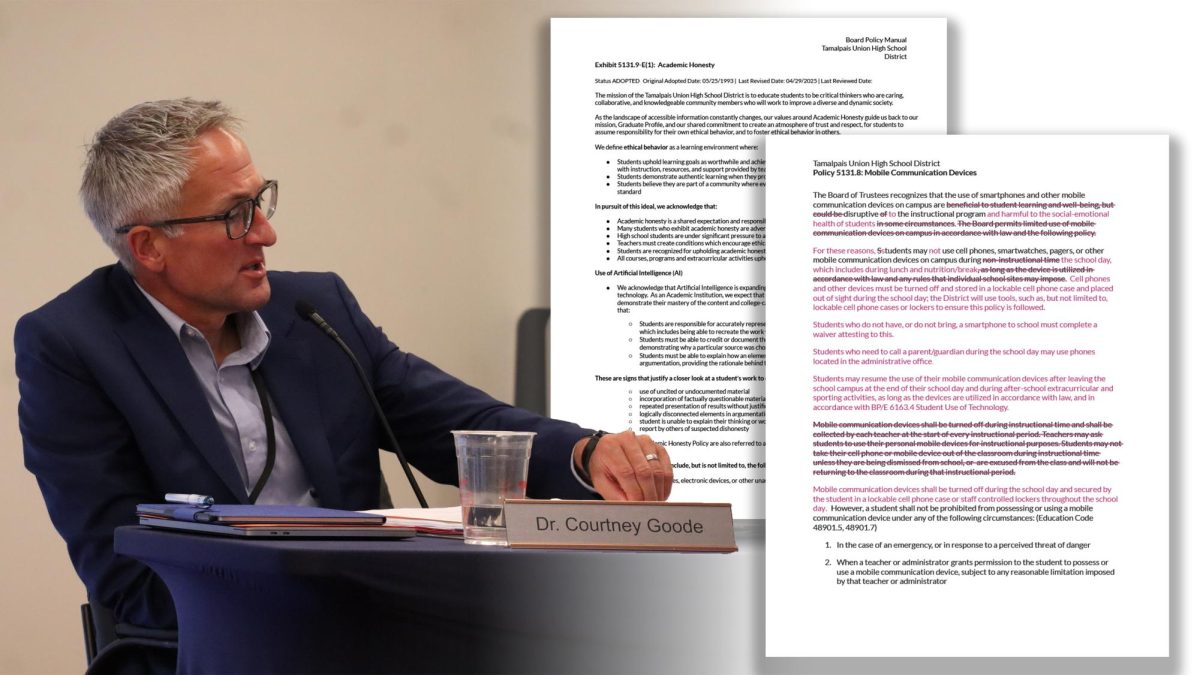
Tamalpais Union High School District (TUHSD) Superintendent Courtney Goode said those broader conditions were part of what led to the final decision to cancel the trip.
“There was growing concern that was rising from some parents who were involved with the trip, and then it wasn’t until the week before that I also started hearing concerns from teachers who were responsible for the trip,” Goode said.
The advisers Sharilyn Scharf, Michael Lavezzo and Morgan Parr had reached out to the station chief at the U.S. Embassy in Cuba for guidance on whether students should travel. According to Goode, the response raised additional concerns.
“If you were to have read that response, it was sort of a master class in saying ‘don’t come to Cuba’ without saying ‘don’t come to Cuba’,” Goode said.
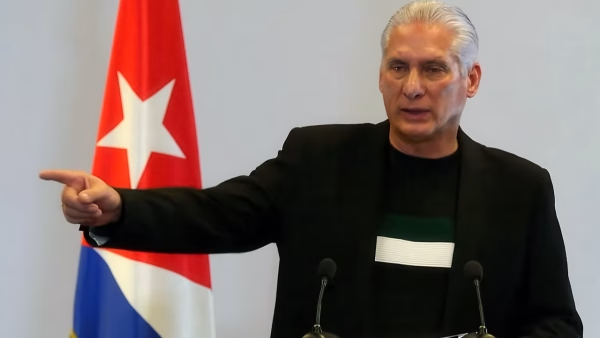
Goode also stated that comments caused additional concerns after a press conference on Feb. 5 from the President of Cuba, Miguel Díaz-Canel, about worsening economic conditions and tensions with the United States and Venezuela.
“Then he also, in that same press conference, said something to the effect of ‘we’re not at a state of war, but we’re preparing for one.’ That was like goodness gracious, we’re not just looking at economic collapse, but potential government collapse, and we’re going to have 85 kids there. That’s crazy,” Goode said.
Ultimately, the district had to prioritize safety.
“My number one responsibility is student safety,” Goode said. “In no way in good conscience could I say, ‘Yeah, let’s go on a wing and a prayer.’”
For many students, however, the trip represented more than travel. Many hoped it would allow them to connect with Cuban students and learn about a different culture.
“To meet someone who grew up in a country that has a lot of different cultures and social norms than we do would be so interesting,” Weis said. “I wanted to learn how Cuba works, and about their music, and the art there.”
Students gathered the day after the announcement to discuss their reactions as a group.
“It’s hard not to be mad, it’s hard not to place blame, but I think everyone is accepting it the best that they can,” Weis said. “It’s obviously Trump’s fault, and I think everyone is sad and annoyed, but I think for the most part it’s just really disappointing.”
Families also raised questions about refunds after the cancellation. Goode said the district was not responsible for the travel payments, which were made to a travel agency.
“The money is not the responsibility of the district,” Goode said.
Although the trip was cancelled, Goode acknowledged the value of experiences like the one students hoped to have.
“Anytime that you can broaden your perspective and your understanding of the world in which we live, you’re gaining a lot from that,” Goode said. “The fact they weren’t able to go doesn’t sit well with me.”
Despite the cancellation, Weis said the experience students hoped to have in Cuba still matters.
“We lost the opportunity to see a country that has some of the coolest history in the world,” Weis said.
![Assistant Superintendent of Business and Operations Corbett Elsen presented an updated budget proposal for the 2026-27 fiscal year to the Tamalpais Union High School District (TUHSD) board of trustees on Tuesday, June 16.
Elsen presented an in-depth analysis of the district’s revenues, expenditures, future outlooks and the global and economic uncertainties affecting the district's revenue due to inflation and the war in Iran.
Because TUHSD is a basic-aid district, Elsen explained the significance of the housing market, stressing the gravity of the district’s financial situation as a result of lower demand.
“This is the bread and butter of our revenue: property tax revenues, [projected] to bring in over $93 million,” Elsen said, adding, “But ... we have decreased our revenue growth rate [projections].”
Elsen will return to the board of trustees on June 23, where the board will take formal action to adopt the proposed budget. To learn more about the updated budget proposal from the meeting, visit the June 16 TUHSD Gamut Online agenda.](https://redwoodbark.org/wp-content/uploads/2026/06/snapshot-1200x675.png)