Fears and concerns over the smartphone epidemic filled the Redwood library on March 11, 2026, during a scheduled public forum discussing the future of phone policies across the five schools in the Tamalpais Union High School District (TUHSD), including the possible implementation of Yondr locking pouches.
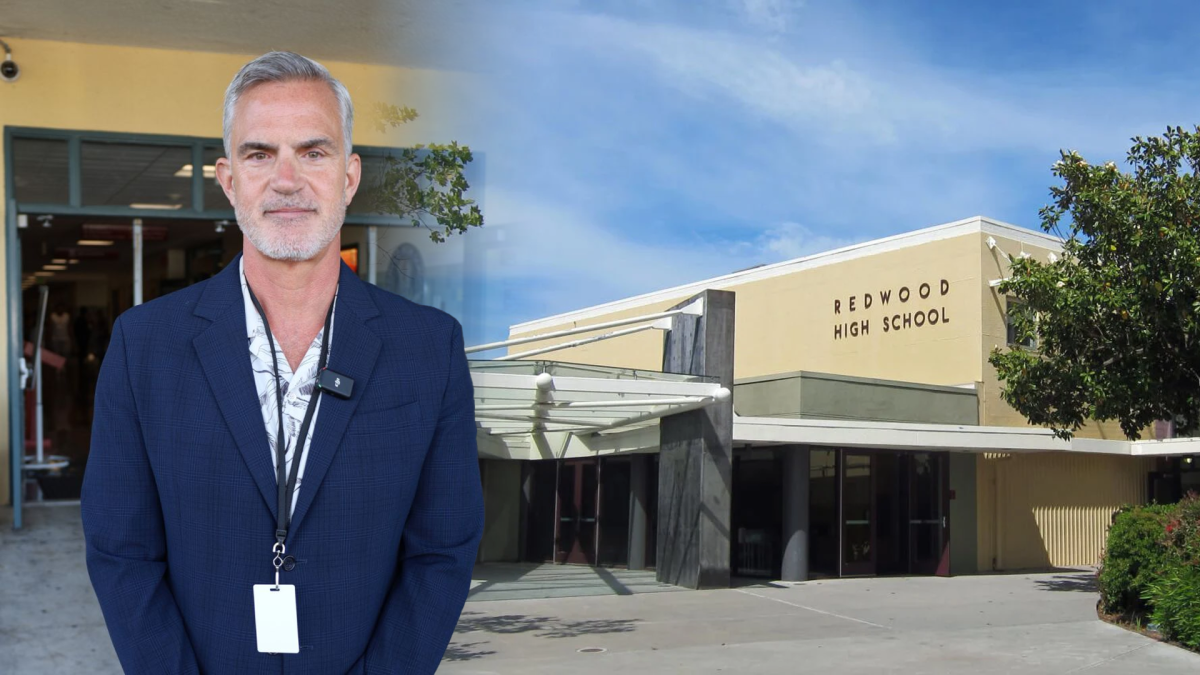
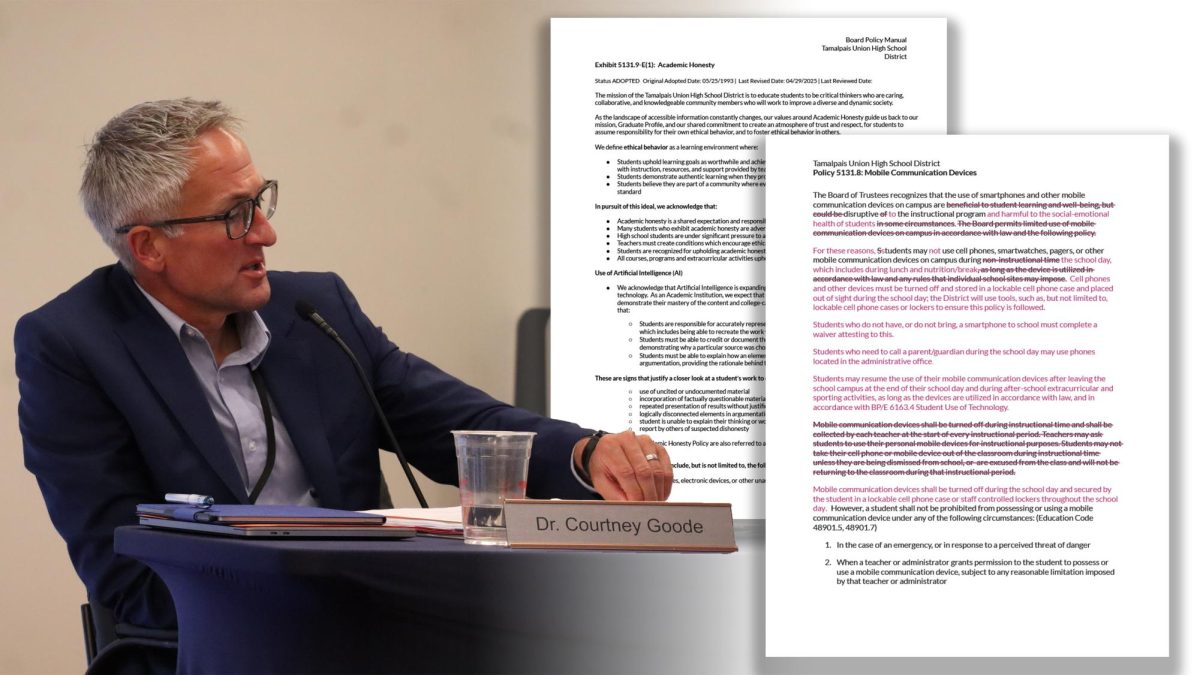
The discussion forum, led by Superintendent Dr. Courtney Goode, focused on the concerns that parents, educators and district officials have about student use of smartphones. Goode cited his three main concerns during his presentation.
“I believe there are three universal truths as it relates to smartphones and social media. Universal Truth number one, smartphones [and] social media are addictive,” Goode said. “Universal truth number two, smartphone [and] social media [harm] mental health. Universal truth number three, smartphone [and] social media [impair] learning.”
During the presentation, Goode focused on studies that found that having phones within a persons visibility is just as bad as having a phone in one’s hand.
Furthermore, Goode cited concerns of students having their phones during lunch hours and passing periods, believing that it takes away from student interaction.
“Before school started…kids are glued to their phones… That’s the gap in our current policy and where it doesn’t go far enough,” Goode said. “This [discussion] is not about our current policy not being enforced… This is about [how] our current policy doesn’t go far enough.”
Parents and other adults that attended the meeting generally agreed with Goode’s views on the problem. Mothers Against Media Addiction (MAMA) Marin chapter leader Lauren Goodman expressed her fears of smartphone use by students.
“I do national work on a policy level around cell phone policies…The truth is that cell phones, unlike cigarettes and alcohol and cocaine, are legal for children,” Goodman said. “It’s an addictive substance, it’s kind of an easy access drug in your pocket, and we already have a precedent for what we do with drugs and alcohol, which [are] not allowed at school.”

To combat cell phone usage, Goode presented three solutions being considered by the district: banning smartphones from school, having smartphones be kept in students’ backpacks or the implementation of Yondr pouches. Goode emphasized the effectiveness of Yondr pouches specifically.
The third idea, Yondr pouches, will cost the district an upfront cost between $135,000-$155,000 and an additional expenditure between $25,000-$35,000 every year following.
One speaker, a pediatrician who has chosen to remain anonymous, agreed with the implementation of Yondr pouches in our district.
“[Goode empahsized] having that physical barrier, and I think the Yondr pouch is a physical barrier, right? A backpack is not… there’s still sort of that enticement,” the anonymous source said, “But I think… there’s going to be some hiccups. But, like, it doesn’t mean that we shouldn’t make that change.”
Overall, the discussion allowed for parents to voice their concerns, ask questions and better educate themselves on the district’s goals for phone-free schools for the 2026-27 school year. Karen, a parent of a Redwood sophomore who requested to not share her last name to maintain a level of anonymity, summarized her views on the meeting’s success.
“I really liked that they had this meeting today, I thought it was important to talk about [it], I was glad that everyone was willing to share their ideas,” Karen said.
The district board will discuss the issue further at its March 24 meeting at the Kreps Conference Center, but no vote is expected at that time.

![Assistant Superintendent of Business and Operations Corbett Elsen presented an updated budget proposal for the 2026-27 fiscal year to the Tamalpais Union High School District (TUHSD) board of trustees on Tuesday, June 16.
Elsen presented an in-depth analysis of the district’s revenues, expenditures, future outlooks and the global and economic uncertainties affecting the district's revenue due to inflation and the war in Iran.
Because TUHSD is a basic-aid district, Elsen explained the significance of the housing market, stressing the gravity of the district’s financial situation as a result of lower demand.
“This is the bread and butter of our revenue: property tax revenues, [projected] to bring in over $93 million,” Elsen said, adding, “But ... we have decreased our revenue growth rate [projections].”
Elsen will return to the board of trustees on June 23, where the board will take formal action to adopt the proposed budget. To learn more about the updated budget proposal from the meeting, visit the June 16 TUHSD Gamut Online agenda.](https://redwoodbark.org/wp-content/uploads/2026/06/snapshot-1200x675.png)