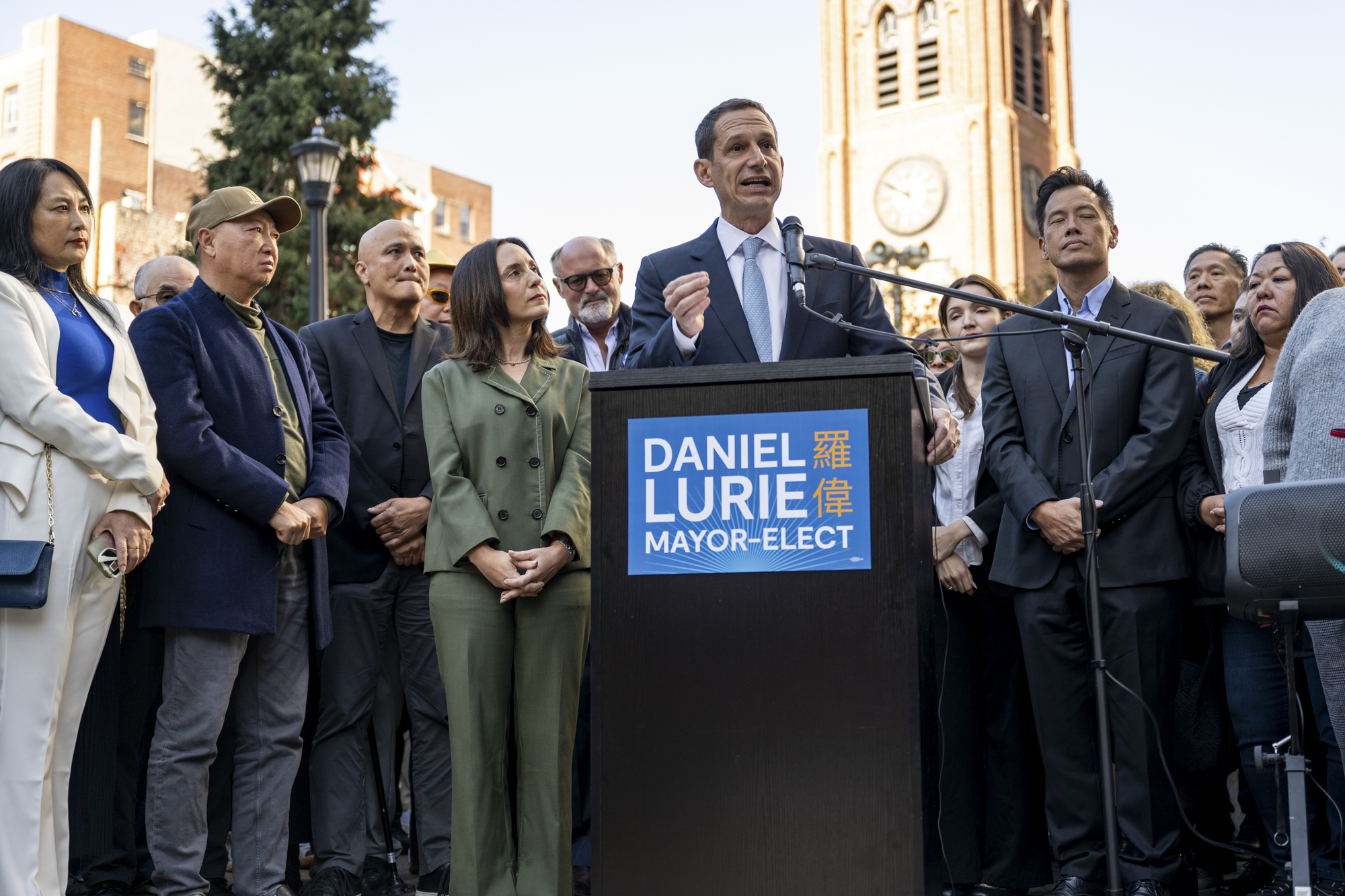
Jan. 8 marks one year since Daniel Lurie was sworn in as San Francisco’s 46th mayor, a timely checkpoint for evaluating his early agenda and his conversation with The Bark.
Following half a decade in a post-pandemic society, San Francisco has been considerably dubbed in the media by its soaring housing costs, public safety concerns, skyrocketing crime rates and a severe fentanyl epidemic. Coming up on one year as mayor, San Francisco is officially en route towards an utter revitalization under mayoral elect Daniel Lurie, who took office in January 2025. With policies aimed at engagement, community collaboration and taking accountability, Lurie has been restoring the city’s vibrant culture through enacting a new San Francisco for all.
(Photo courtesy of Beth LeBerge/KQED)
Lurie plans to ratify his intentions of a brighter future during the city’s ongoing revival, believing that a flourishing city benefits young people throughout the entire Bay Area.
“We have to not only bring San Francisco back, but bring it to new heights,” Lurie said. “Hope and optimism are already coming back in spades.”
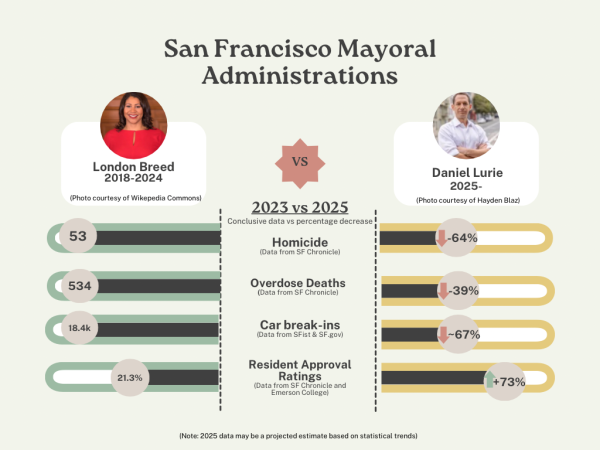
For Lurie, public safety is his initial priority. Immediately upon taking office, he declared a fentanyl state of emergency, unlocking resources to combat an epidemic that significantly impacts the lives of residents and visitors. With two deaths by overdose per day in the city under San Francisco’s previous administration, Lurie’s has expanded outreach efforts, providing targeted support in communities heavily affected by drug use, like the Mission and Tenderloin Districts, decreasing overdose deaths by 39 percent since January of 2025 (SF.gov).
Expanding on the root of this crisis, housing affordability is a critical concern for residents and especially young adults. Lurie introduced the comprehensive “family zoning” plan, aiming to create tens of affordable housing units. This plan includes converting vacant downtown office spaces into affordable residential units, offering practical options for independent living in the city. In October 2025, the Board of Supervisors’ Land Use and Transportation Committee approved two specific amendments to the plan, one exempting rent-controlled buildings of more than two units, affecting over 84,000 units, and the other offering incentives for small business ground floor spaces in new developments, preserving existing affordable housing.
“We have an excess amount of vacant office supply right now [because of COVID-19]. Our job as an administration is to create the conditions that allow people to come in and build. It takes seven years and over a million dollars to build one unit of housing and we’re trying to compress the time it takes to get housing through permitting from seven years down to two or three. We want to make downtown a 24/7 community where people can live, work, play and also house our teachers, nurses, firefighters and police officers,” Lurie said.
In regard to public safety concerns, Lurie is committed to begin fully staffing the city’s police department, currently short approximately 500 officers, to reflect a safer environment for residents, which has proven to be effective with a 70-year low in violent crime in San Francisco.
“Crime is going down year after year. Property crime is down 35 percent and violent crime is down 39 percent — car break-ins in February were the lowest in 22 years,” Lurie said.
English teacher Emily LaTourette has lived in San Francisco since 2009 and has firsthand experience of the city’s ups and downs over the last 16 years.
“With COVID, some of the problems that were already existent before the pandemic were highly exacerbated. People who live here can see challenges, but are also aware of all the things we like about the city, whereas people not living here seem to rely solely on stereotypes. I’m intrigued to see how these changes [under Lurie’s administration] pan out. I tend to think about it like, let’s see how we can make it work for everybody. Going to see the city for yourself and to appreciate what’s there that’s really amazing is so important, not necessarily just seeing it for its problems,” LaTourette said.
Recognizing the important role students play in revitalizing the city, Lurie encourages active participation from the younger generations in civic activities. He invites Marin County students to volunteer in local beach clean-up initiatives, attend night markets and support San Francisco businesses, emphasising the youth’s essential contribution to the city’s resurgence
“Come to the city, talk it up, stay positive and get involved,” Lurie said. “This is your city too, you have the power to help San Francisco rise again and lead the Bay Area into a brighter, more inclusive future.”
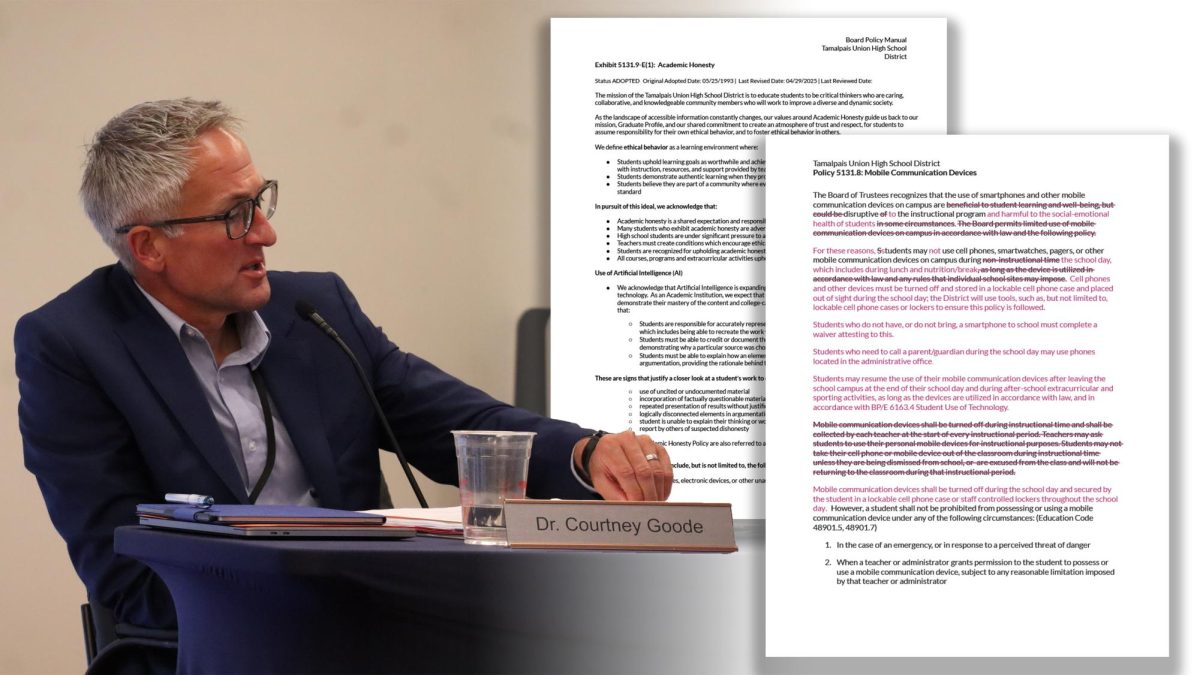
![Assistant Superintendent of Business and Operations Corbett Elsen presented an updated budget proposal for the 2026-27 fiscal year to the Tamalpais Union High School District (TUHSD) board of trustees on Tuesday, June 16.
Elsen presented an in-depth analysis of the district’s revenues, expenditures, future outlooks and the global and economic uncertainties affecting the district's revenue due to inflation and the war in Iran.
Because TUHSD is a basic-aid district, Elsen explained the significance of the housing market, stressing the gravity of the district’s financial situation as a result of lower demand.
“This is the bread and butter of our revenue: property tax revenues, [projected] to bring in over $93 million,” Elsen said, adding, “But ... we have decreased our revenue growth rate [projections].”
Elsen will return to the board of trustees on June 23, where the board will take formal action to adopt the proposed budget. To learn more about the updated budget proposal from the meeting, visit the June 16 TUHSD Gamut Online agenda.](https://redwoodbark.org/wp-content/uploads/2026/06/snapshot-1200x675.png)